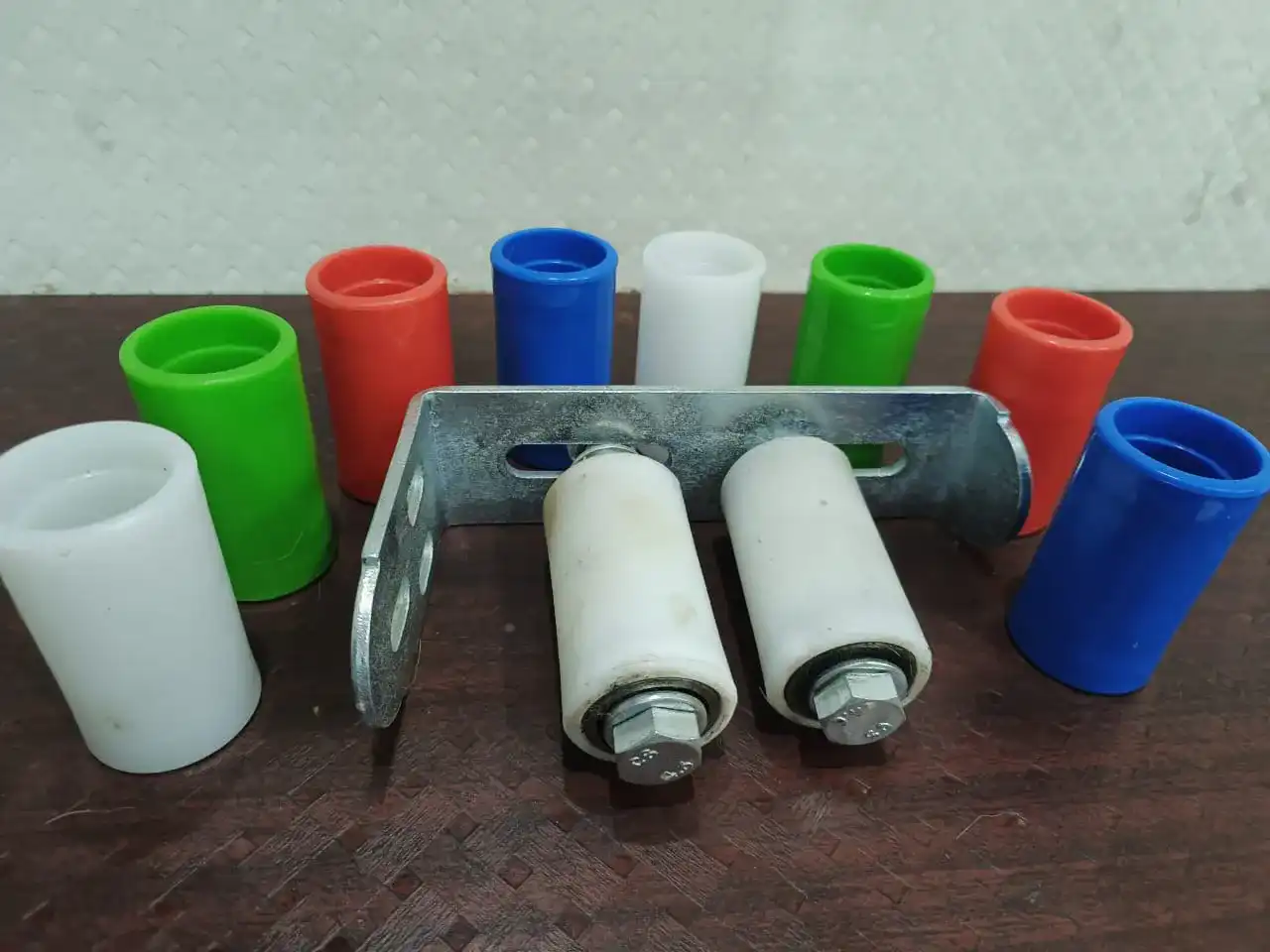
The Ultimate Master Guide to Nylon Rollers: Engineering the Future of Smooth and Silent Gate Operations
The architectural and industrial manufacturing landscapes have undergone a massive transformation over the last decade. As infrastructure becomes more advanced, the demand for precision-engineered components has skyrocketed. In the realm of sliding gates, automated entry systems, and heavy-duty material handling, a single component often dictates the entire system's efficiency, longevity, and acoustic profile. That component is the Nylon Roller.
For generations, the standard protocol for gate fabrication relied heavily on cast iron or solid steel rollers. While metal offered perceived strength, it brought along severe operational drawbacks—debilitating noise pollution, rapid track degradation, high friction coefficients, and inevitable catastrophic rusting. Today, the modern industrial framework has shifted. Through the advanced application of polymer engineering, high-density nylon has replaced traditional metals, offering an unmatched synthesis of durability and fluid motion.
As an authoritative manufacturer in the industrial hardware sector, Shri Radha Enterprises stands at the forefront of this structural evolution. We engineer, test, and manufacture premium gate components designed specifically for rigorous environments. In this comprehensive, multi-part master guide, we will dissect the mechanical superiority of polymer-based gate systems, exploring everything from the foundational material science to the exact load-bearing capabilities of a Sliding Nylon roller wheel with bracket.
Whether you are a structural engineer, an industrial contractor, or a facility manager looking to upgrade your premises, this guide will provide the exact technical insights required to make an informed, permanent hardware upgrade.
1: The Material Science Behind the Modern Nylon Roller
To truly understand why the industry has abandoned steel wheels, one must first look at the molecular structure of the replacement material. A premium Nylon Roller is not merely "plastic." It is predominantly forged from Polyamide—a high-performance, semi-crystalline engineering thermoplastic renowned for its extraordinary mechanical properties.
1.1 Understanding Polyamide Formulations
Industrial-grade nylon is synthesized through complex chemical condensation processes. The resulting material possesses a unique combination of high tensile strength, extreme impact resistance, and an incredibly low coefficient of friction. When manufacturing these rollers, specific additives, such as molybdenum disulfide or glass fibers, are sometimes introduced into the polymer matrix. This enhances the material's structural rigidity while maintaining its self-lubricating characteristics.
The primary reasons Polyamide is the ultimate material for gate movement include:
- Elastic Memory and Impact Absorption: Unlike steel, which dents or deforms permanently under sudden heavy impacts (such as a vehicle gently bumping a gate), high-grade nylon has "elastic memory." It can absorb shock, slightly compress under extreme loads, and immediately return to its original perfectly spherical shape. This prevents the roller from developing flat spots that cause bumpy operations.
- Tribological Excellence (Friction and Wear): Tribology is the science of interacting surfaces in relative motion. A Nylon Roller excels tribologically because its molecular surface does not chemically bond or micro-weld with the steel track beneath it. Metal-on-metal contact creates microscopic tearing (galling), which eventually destroys both the wheel and the track. Nylon glides seamlessly over steel, drastically reducing wear and tear on the entire infrastructure.
- Thermal and Chemical Resilience: Industrial gates located in heavy manufacturing zones or coastal environments face constant exposure to UV radiation, extreme temperature fluctuations, and corrosive airborne chemicals. Premium nylon polymers are chemically inert to most industrial solvents, oils, and alkalis, ensuring the wheel does not degrade, crack, or become brittle over decades of sun and chemical exposure.
2: The Core Assembly – Analyzing the Sliding Nylon Roller Wheel with Bracket
A wheel cannot operate in a vacuum. To effectively transfer the kinetic energy of a moving gate while supporting its massive static weight, the polymer wheel must be housed within a structurally flawless containment unit. This complete assembly is universally referred to in the hardware industry as the Sliding Nylon roller wheel with bracket.
2.1 The Physics of Load Distribution
When a heavy industrial sliding gate—often weighing anywhere from 500 to over 2,000 kilograms—is set into motion, the gravitational force is entirely concentrated on a few square centimeters of contact area at the bottom rollers. If the bracket housing the roller is weak, the sheer downward force combined with lateral wind pressure will cause the bracket walls to splay outward, leading to immediate derailment.
At Shri Radha Enterprises, the engineering of the bracket is treated with the same critical importance as the formulation of the nylon itself.
2.2 Engineering the Perfect Bracket Housing
A sub-standard bracket will fail long before the nylon wheel ever wears out. Therefore, professional-grade brackets require stringent manufacturing protocols:
- Heavy-Gauge Galvanized Steel: The outer housing of our brackets is manufactured using ultra-thick, cold-rolled steel. To completely neutralize the threat of rust—especially in humid climates—the steel undergoes a deep hot-dip galvanization process. This coats the bracket in a protective zinc layer that acts as a sacrificial anode, preventing oxidation even if the outer surface is scratched.
- Anti-Vibration Geometry: The structural design of the Sliding Nylon roller wheel with bracket features a reinforced U-shape or heavy-duty enclosed chassis. This specific geometric shape prevents the bracket from flexing under high-torque starts and stops generated by heavy automated gate motors.
- Precision Machined Axle Pins: The pin that connects the nylon wheel to the steel bracket is the actual pivot point of the entire operation. We utilize high-tensile, hardened steel axles that fit perfectly within the wheel's core, preventing any lateral play or "wobble" that could offset the gate's strict linear trajectory.
By combining the shock-absorbing, frictionless properties of a pure Nylon Roller with the unyielding strength of a galvanized heavy-gauge steel bracket, manufacturers have successfully created a fail-proof foundation for any sliding gate architecture.
Shri Radha Enterprises Team
We specialize in nylon rollers, sliding gate wheels, gate hardware, scaffolding items, cuplock systems, and accessories.