Solar Base Plate: Complete Guide to Types, Sizes, Materials, Uses & Buying Tips (2026)
Featured Products
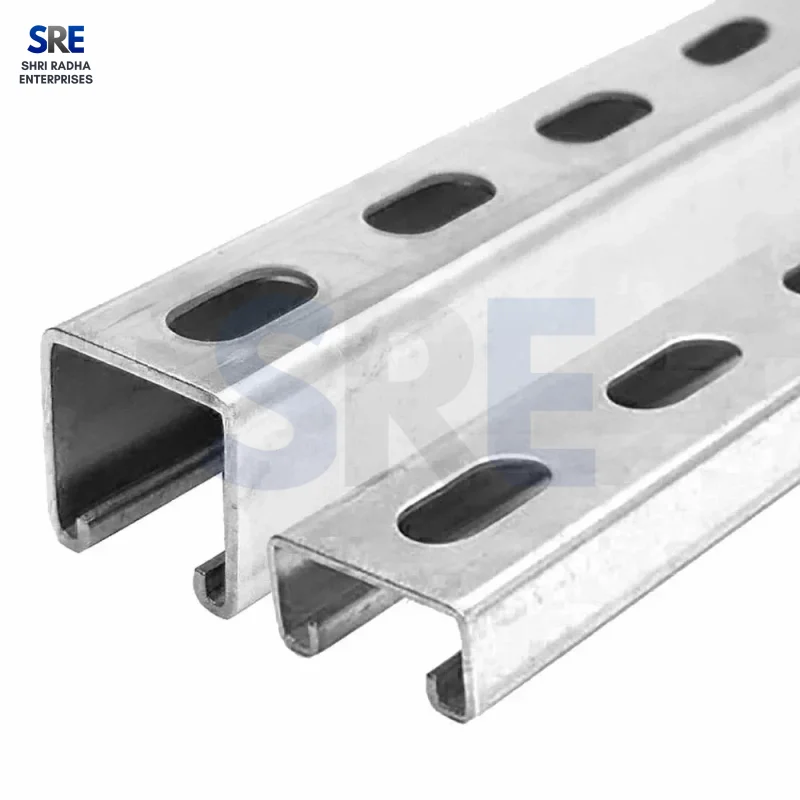
Solar Base Plate: Complete Guide to Types, Sizes, Materials & Applications
Introduction
When people think about a solar power plant, they usually focus on solar panels. Some pay attention to the inverters, while others compare the quality of mounting structures. However, one critical component often goes unnoticed—the Solar Base Plate.
Although it looks like a simple steel plate, it is one of the most important parts of a solar mounting structure. Every vertical support, C Channel, Lip Channel, or structural member transfers its load through the base plate before it reaches the concrete foundation. If the base plate is not designed correctly, it can affect the stability, alignment, and long-term performance of the entire solar installation.
Whether you are an EPC contractor, solar structure manufacturer, fabricator, project consultant, distributor, or someone planning a solar project, understanding the role of a Solar Base Plate will help you make better purchasing and engineering decisions.
In this comprehensive guide, you'll learn everything you need to know—from what a Solar Base Plate is and how it works to the different sizes, materials, manufacturing process, applications, and practical tips for choosing the right one for your project.
Table of Contents
- What is a Solar Base Plate?
- Why is a Solar Base Plate Important?
- Main Components of a Solar Base Plate Assembly
- Types of Solar Base Plates
- Standard Sizes and Thickness
- Materials Used
- Manufacturing Process
- Galvanization and Surface Finish
- Applications
- How to Choose the Right Solar Base Plate
- Common Buying Mistakes
- Frequently Asked Questions
- Conclusion
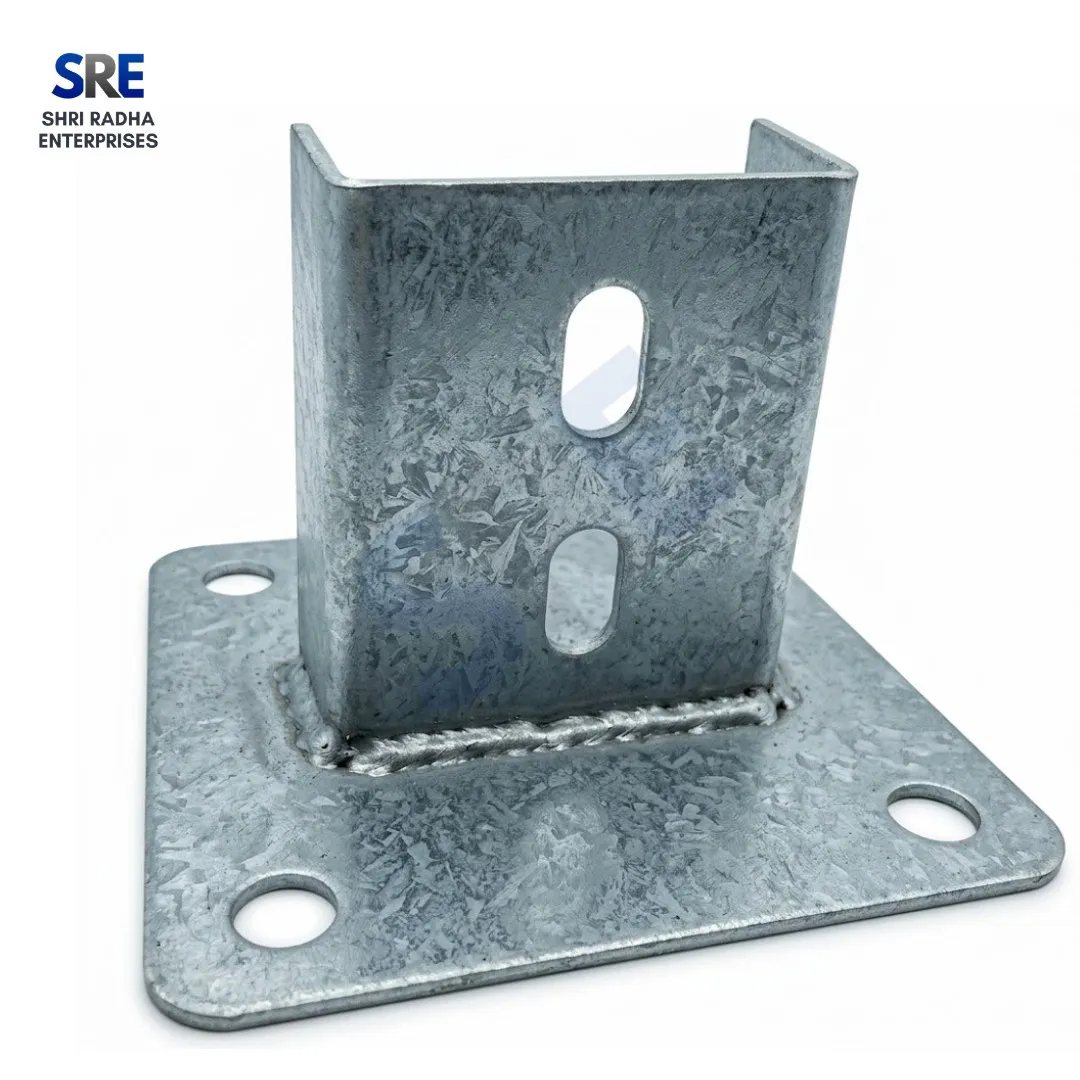
What is a Solar Base Plate?
A Solar Base Plate is a steel plate that forms the foundation connection of a solar mounting structure. It is installed between the structural support member—such as a C Channel, Lip Channel, or vertical column—and the concrete foundation or pedestal.
Its primary function is to distribute structural loads evenly while providing a strong and stable connection for the entire solar support system. In addition to supporting the weight of the solar structure, the base plate also helps resist wind loads, vibration, and other external forces that act on the installation throughout its service life.
Depending on the project requirements, Solar Base Plates can be manufactured in different sizes, thicknesses, hole configurations, and surface finishes. Custom designs are also commonly used for commercial and utility-scale solar projects where standard dimensions may not meet engineering requirements.
Why is a Solar Base Plate Important?
A Solar Base Plate may appear to be a small component, but it has a significant impact on the safety and durability of the complete solar mounting system.
Its importance can be understood through the following points:
Provides Structural Stability
The base plate creates a strong connection between the solar support structure and the foundation, helping maintain stability under different operating conditions.
Distributes Load Evenly
Instead of concentrating weight at a single point, the base plate spreads structural loads across the foundation, reducing stress and improving overall performance.
Improves Installation Accuracy
Precision-punched hole patterns allow accurate bolt alignment, reducing installation time and minimizing on-site adjustments.
Supports Long-Term Durability
When manufactured from quality Mild Steel and protected with a galvanized finish, Solar Base Plates offer excellent resistance against corrosion, making them suitable for long-term outdoor use.
Reduces Maintenance Requirements
A properly designed and manufactured base plate contributes to the overall reliability of the solar structure, reducing the need for frequent repairs or replacements.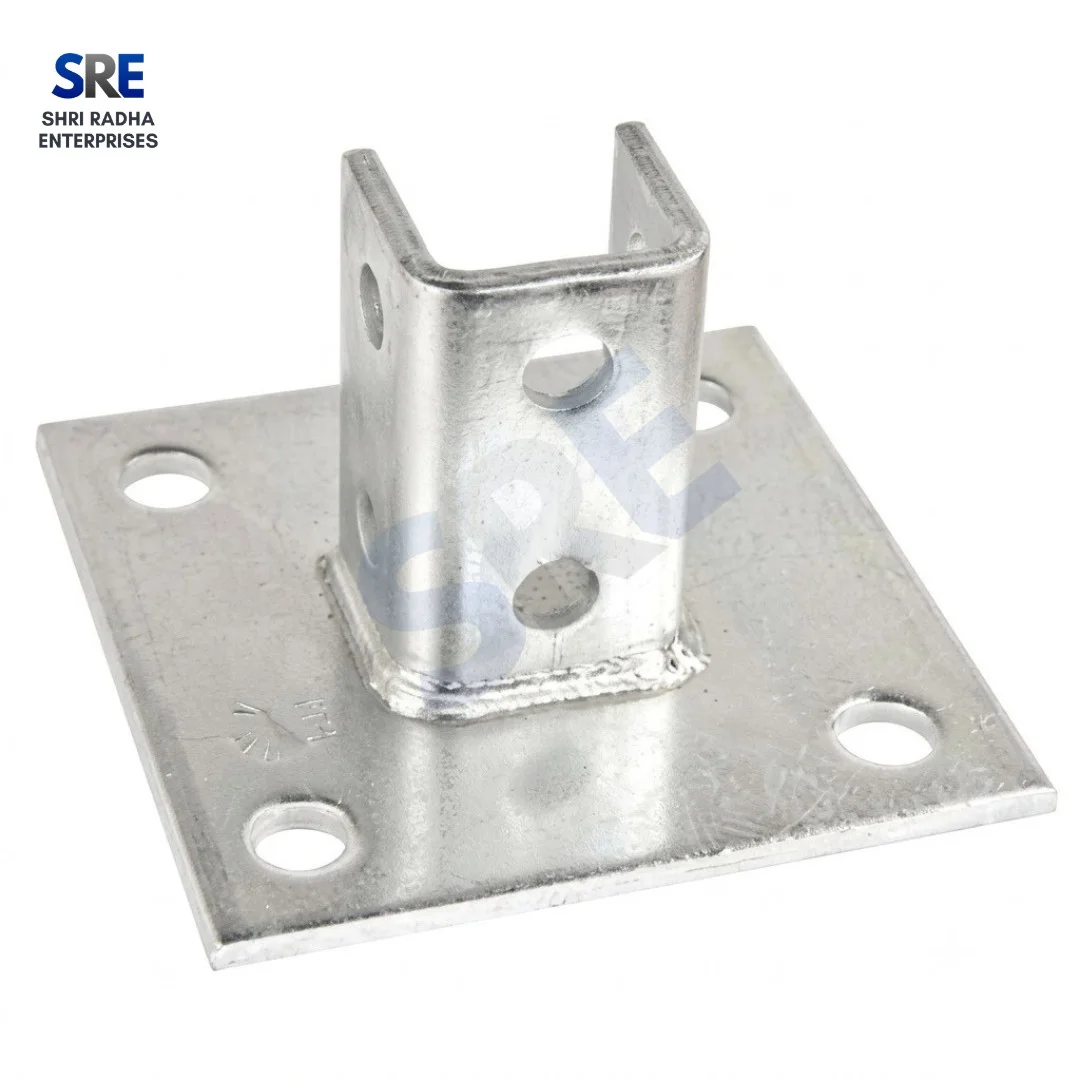
Main Components of a Solar Base Plate Assembly
A Solar Base Plate is not just a flat steel plate with four holes. In a complete solar mounting structure, it works together with several structural components to create a strong, stable, and long-lasting foundation.
Understanding these components helps buyers choose the right product and avoid costly installation mistakes.
1. Base Plate
The Base Plate is the bottom steel plate that sits directly on the concrete foundation. It distributes the load of the complete solar structure evenly and provides a secure anchoring point.
Depending on the project, the base plate can be manufactured in different sizes, thicknesses, and hole patterns.
2. C Channel or Lip Channel
The C Channel (also known as Lip Channel in many projects) is welded or bolted to the base plate. It acts as the vertical structural member that supports the remaining solar mounting framework.
Its size depends on:
- Panel load
- Wind load
- Structure height
- Project design
3. Anchor Bolts
Anchor bolts fix the base plate firmly to the concrete foundation.
Proper bolt alignment is extremely important because even a small error can delay installation and increase labour costs.
That is why precision punching is critical during manufacturing.
4. Welded Joint
Where welded assemblies are required, MIG welding creates a strong connection between the base plate and the structural channel.
A poor weld can become the weakest point of the structure. Therefore, proper welding quality directly affects the overall strength of the solar mounting system.
5. Protective Surface Finish
Since Solar Base Plates are installed outdoors, they remain exposed to rain, moisture, humidity, sunlight, and dust throughout their service life.
To improve corrosion resistance and durability, many customers choose a galvanized finish for long-term protection.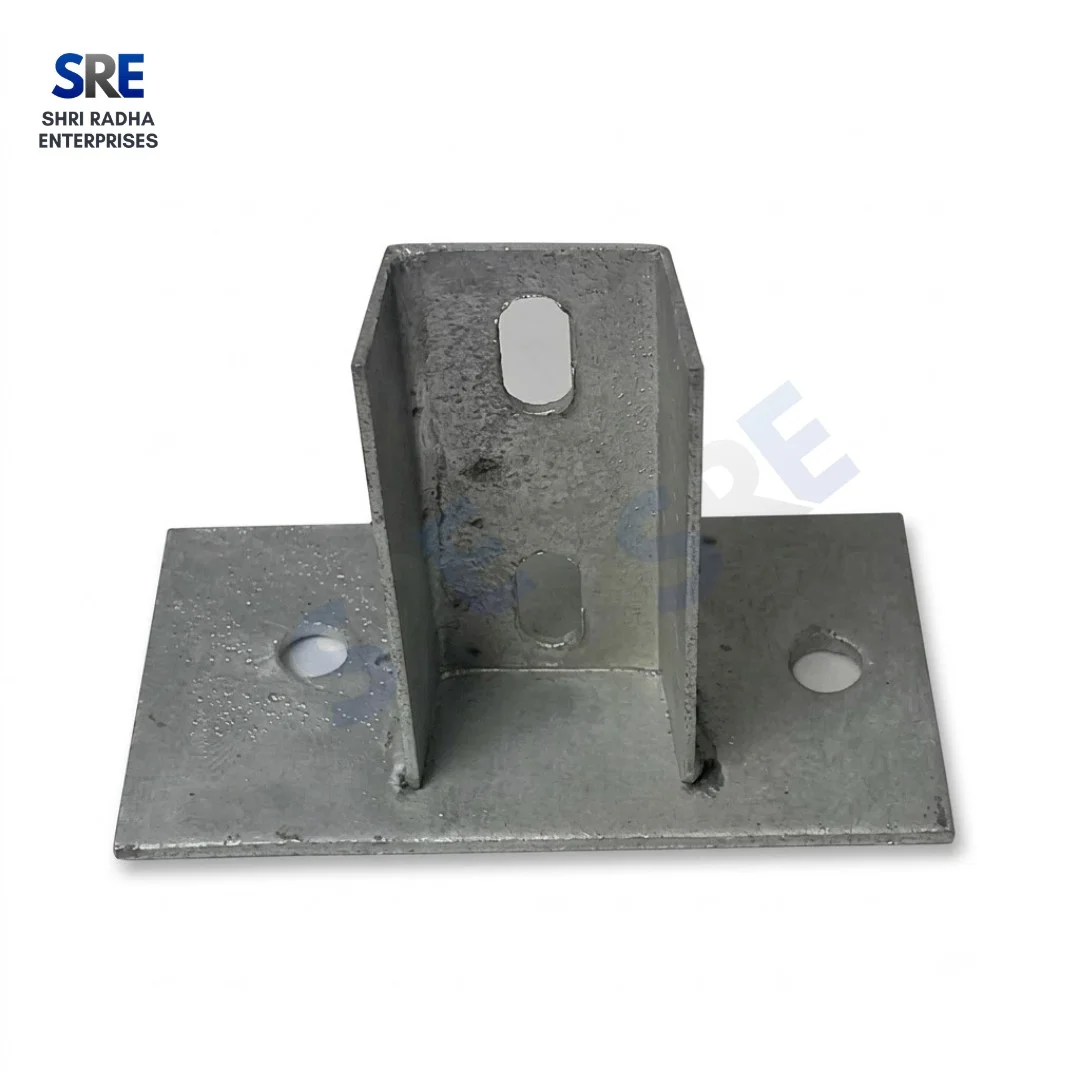
Types of Solar Base Plates
Not every solar project requires the same type of base plate. The correct selection depends on structural load, installation method, environmental conditions, and engineering design.
Below are the most commonly used types.
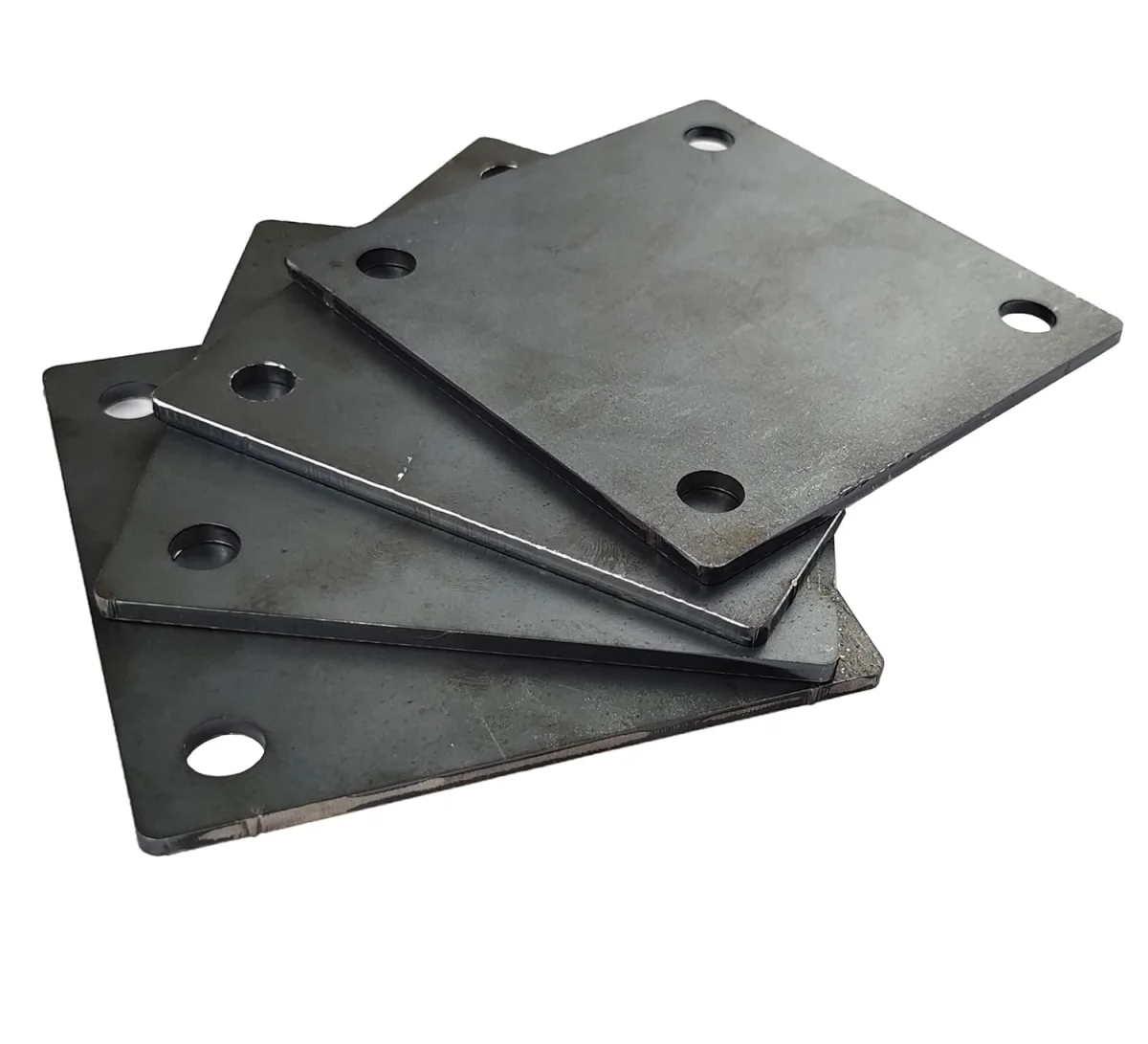
Standard Solar Base Plate
This is the most widely used type in residential and commercial solar installations.
It consists of a precision-cut steel plate with accurately punched mounting holes.
It is suitable for projects where the structural member is connected during installation.
Best For:
- Rooftop Solar
- Small Commercial Projects
- Standard Mounting Structures
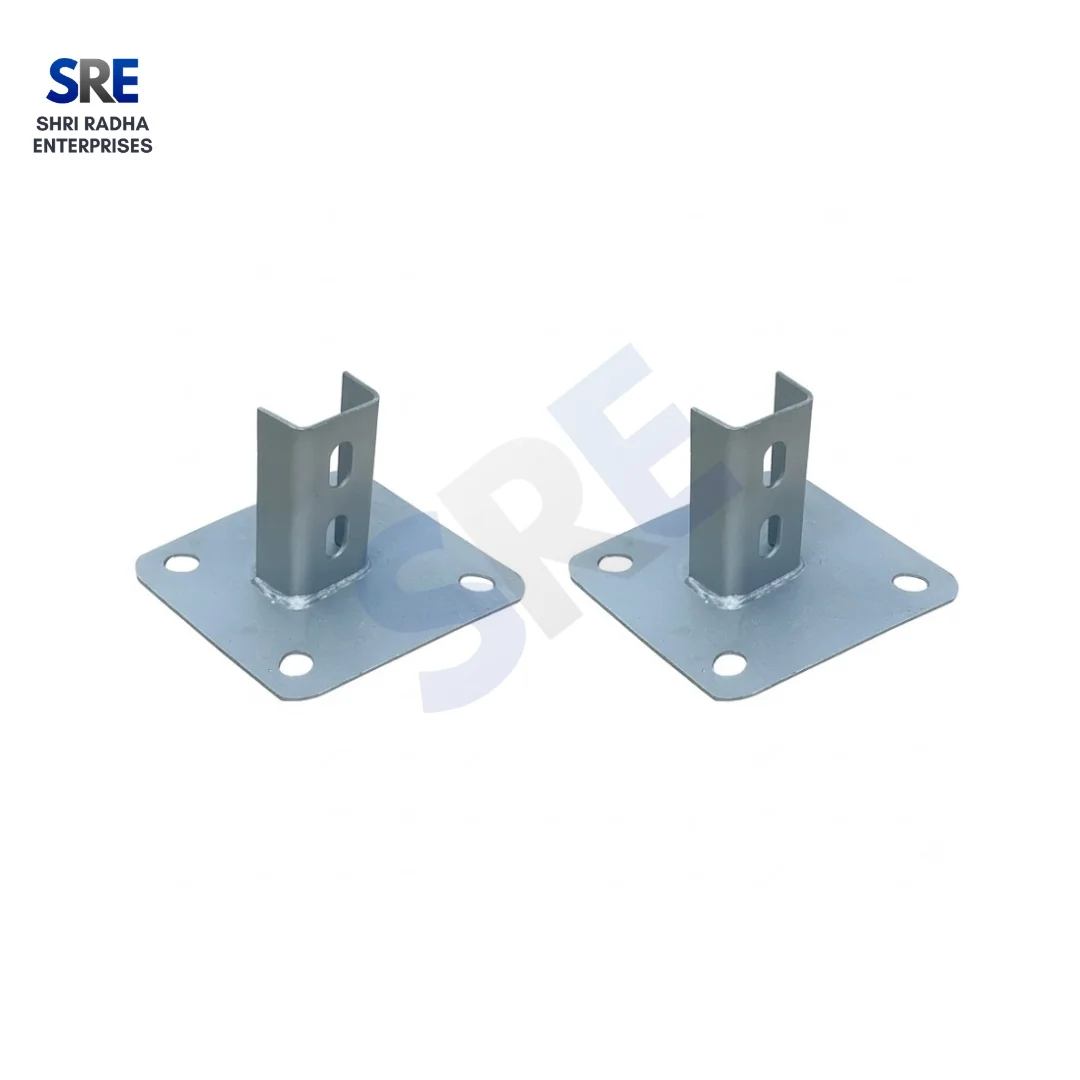
Solar Base Plate with Welded C Channel
In this design, the C Channel is already welded to the base plate before dispatch.
This reduces installation time at the project site and ensures consistent welding quality.
Advantages include:
- Faster installation
- Better alignment
- Reduced site fabrication
- Consistent weld quality
This type is commonly preferred by EPC companies handling large-scale solar projects.
Heavy Duty Solar Base Plate
Heavy-duty Solar Base Plates are manufactured using thicker Mild Steel plates and are designed for projects that require higher structural strength.
These are commonly used in:
- Utility-scale Solar Farms
- High Wind Zones
- Industrial Solar Projects
- Large Ground Mounted Structures
Hot Dip Galvanized (HDG) Solar Base Plate
HDG Solar Base Plates are manufactured to provide enhanced corrosion resistance.
The Hot Dip Galvanizing process creates a protective zinc coating that helps protect the steel against rust and environmental exposure.
These products are widely used in:
- Coastal Areas
- High Humidity Regions
- Industrial Environments
- Long-Life Solar Installations
Custom Solar Base Plates
Every project is different.
Many customers require customized products based on engineering drawings.
Custom manufacturing options include:
- Custom dimensions
- Different plate thicknesses
- Custom hole layouts
- Slotted holes
- Special welding requirements
- Different channel sizes
- Customized finishes
At SRE Manufacturer, Solar Base Plates can be manufactured according to project specifications for OEM buyers, EPC contractors, distributors, and fabricators.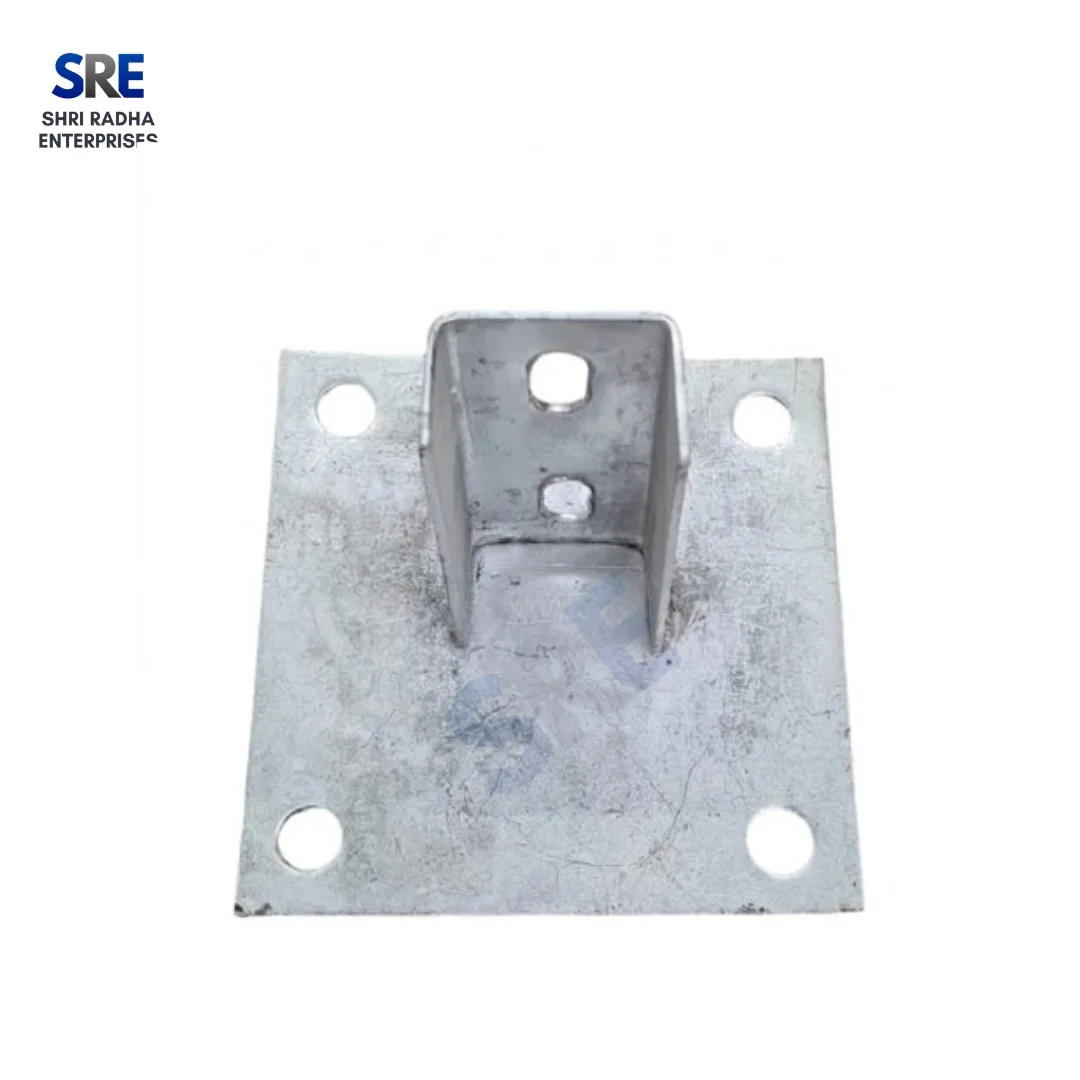
Standard Solar Base Plate Sizes
One of the most common questions buyers ask is:
"Which Solar Base Plate size should I choose?"
The answer depends on the project design, structural load, wind conditions, and the size of the supporting member.
Some commonly used sizes include:
Plate SizeTypical Application100 × 100 mmResidential Rooftop Systems125 × 125 mmCommercial Rooftop Projects150 × 150 mmIndustrial Solar Structures200 × 200 mmUtility Scale Solar Farms
Apart from these standard sizes, customized dimensions can also be manufactured based on engineering drawings.
How Thickness Affects Performance
Thickness is one of the most important factors in a Solar Base Plate.
Choosing the correct thickness helps improve structural performance while avoiding unnecessary material costs.
Generally:
- Thin plates are suitable for lighter structures.
- Medium-thickness plates are commonly used in commercial installations.
- Heavy-duty applications require thicker plates to handle higher loads and environmental forces.
Instead of selecting thickness based only on price, it should always match the structural design and engineering calculations of the project.
Material Used in Solar Base Plates
The performance of a Solar Base Plate depends not only on its design but also on the quality of the raw material used during manufacturing. A well-designed base plate made from inferior steel may fail to deliver the required structural performance, while a properly manufactured plate using quality raw material can provide reliable service for many years.
At SRE Manufacturer, we manufacture Solar Base Plates using high-quality Mild Steel (MS) that offers an excellent balance of strength, weldability, and cost-effectiveness. Depending on the customer's project requirements, different thicknesses and dimensions can be produced while maintaining dimensional accuracy.
Why Mild Steel (MS) is Widely Used
Mild Steel is one of the most preferred materials for Solar Base Plates because it provides:
- Excellent structural strength
- Easy fabrication and welding
- Good machinability
- High durability
- Cost-effective manufacturing
- Compatibility with galvanized coating
- Long service life when properly protected
For most rooftop, commercial, and industrial solar projects, Mild Steel remains the preferred choice due to its dependable performance and availability.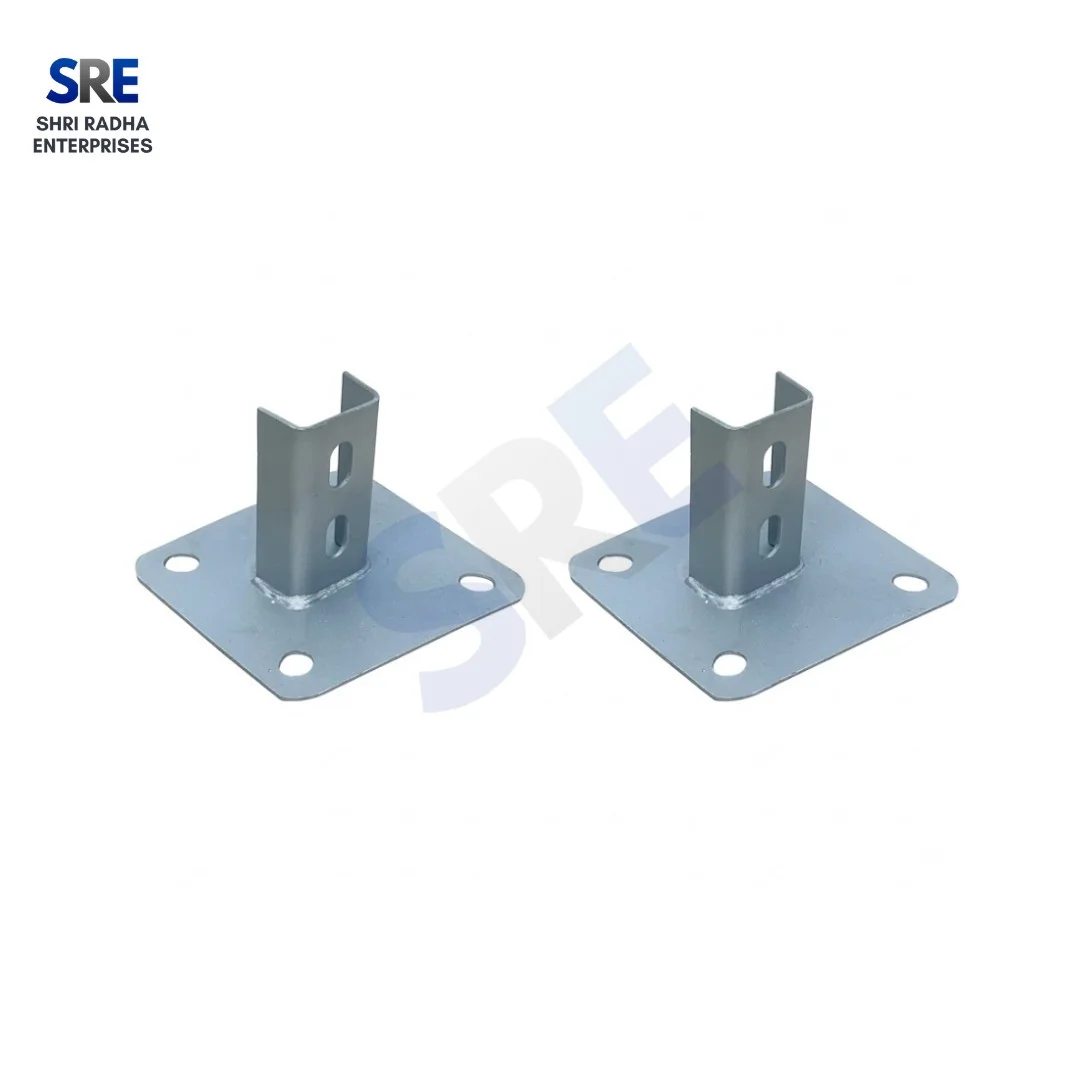
Surface Finish Options
Since Solar Base Plates are installed outdoors, selecting the right surface finish is essential for protecting the product against corrosion and extending its service life.
Depending on the application, the following finishes are commonly available:
Raw Mild Steel Finish
Suitable for projects where additional surface treatment will be carried out after fabrication or where corrosion exposure is minimal.
Hot Dip Galvanized (HDG)
A zinc coating is applied to the steel surface through the Hot Dip Galvanizing process. This finish provides excellent protection against rust and harsh weather conditions, making it one of the most preferred options for outdoor solar installations.
Customized Finish
Additional surface treatments can be provided according to project specifications and customer requirements.
Solar Base Plate Manufacturing Process
Manufacturing a Solar Base Plate involves much more than cutting a steel plate. Every step influences the final strength, dimensional accuracy, and performance of the product.
Below is the typical manufacturing process followed for high-quality Solar Base Plates.
Step 1 – Raw Material Inspection
The process begins with selecting quality Mild Steel sheets according to the required thickness and specifications.
Before production starts, the raw material is checked for:
- Surface quality
- Thickness accuracy
- Flatness
- Material consistency
Using quality raw material ensures that the finished product performs reliably in structural applications.
Step 2 – Plate Cutting
The steel sheet is cut according to the required dimensions specified in the engineering drawing.
Accurate cutting is essential because even a small dimensional variation can create alignment issues during installation.
Step 3 – Precision Punching
After cutting, holes are produced using precision punching equipment.
This stage is one of the most critical operations because accurate hole positioning directly affects installation quality.
Benefits of precision punching include:
- Correct bolt alignment
- Faster installation
- Reduced site adjustments
- Better dimensional consistency
- Professional finish
Step 4 – MIG Welding
For Solar Base Plate assemblies that include welded C Channels or structural members, MIG welding is used to create strong and durable joints.
A properly executed weld ensures:
- Higher joint strength
- Better structural stability
- Improved durability
- Consistent fabrication quality
Poor welding can weaken the complete structure, which is why welding quality should never be compromised.
Step 5 – Surface Finishing
Once fabrication is complete, the products undergo surface finishing based on customer requirements.
Where galvanized products are specified, the finishing process helps protect the steel from corrosion and environmental exposure.
A high-quality finish also improves the appearance of the product and increases its service life.
Step 6 – Quality Inspection
Every manufacturing batch should be inspected before dispatch.
Typical quality checks include:
- Plate dimensions
- Hole position accuracy
- Plate thickness
- Weld quality
- Surface finish
- Burr-free edges
- Overall workmanship
Only products that meet the required quality standards should proceed to packing and dispatch.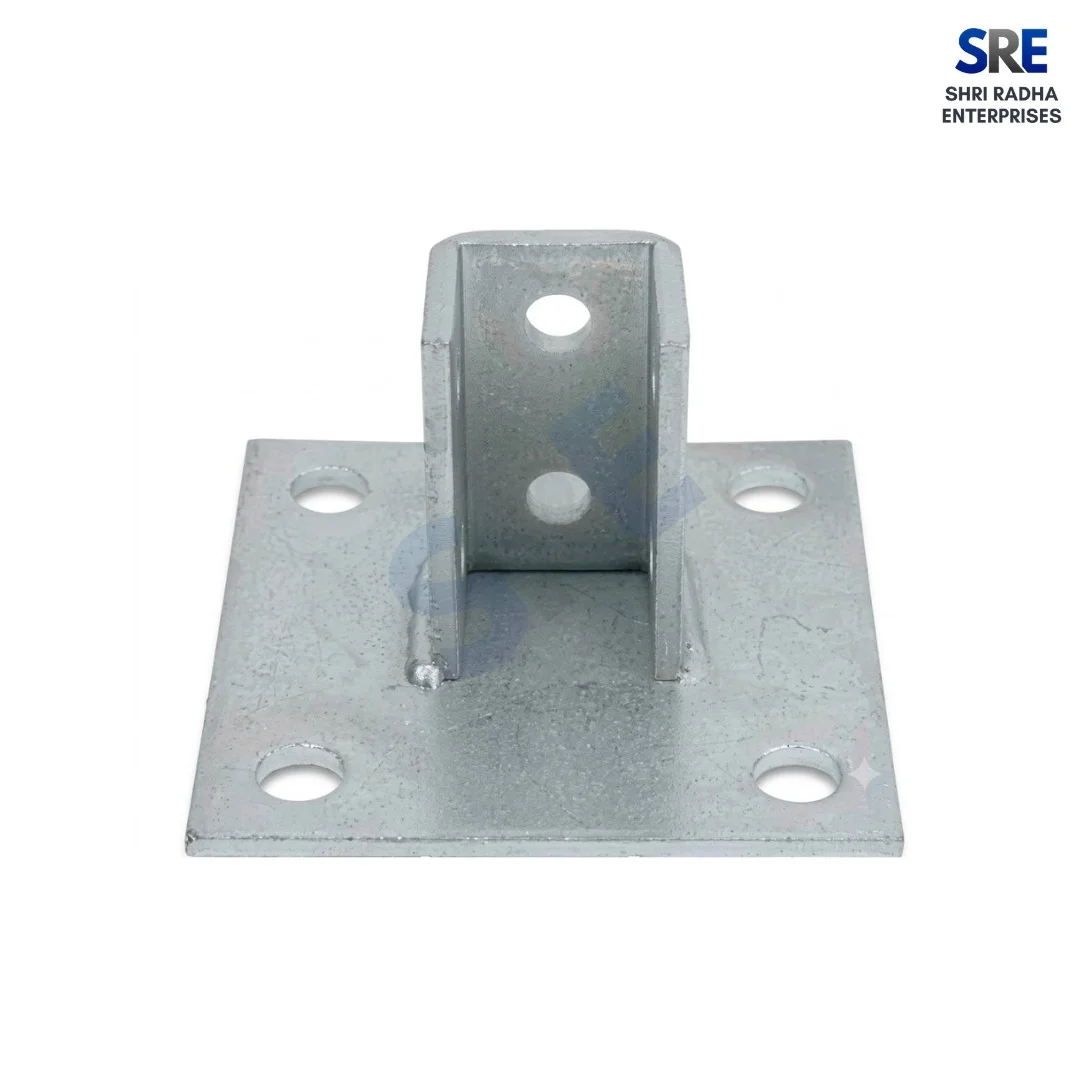
Why Galvanization is Important
Solar projects are expected to operate for decades under changing weather conditions.
Without proper corrosion protection, steel components may begin to rust over time, affecting both appearance and structural performance.
A galvanized coating creates a protective zinc layer over the steel surface, helping protect the product against moisture and environmental exposure.
Benefits of Galvanized Solar Base Plates
- Excellent corrosion resistance
- Longer service life
- Lower maintenance
- Better outdoor performance
- Improved appearance
- Suitable for harsh weather conditions
- Better long-term value
For most outdoor solar installations, galvanized Solar Base Plates are considered the preferred choice.
Common Manufacturing Defects to Avoid
Not every Solar Base Plate available in the market is manufactured to the same quality standards.
Before purchasing, buyers should carefully inspect the product for common manufacturing defects.
Burrs Around Holes
Sharp burrs indicate poor punching quality and can slow down installation while increasing safety risks.
Incorrect Hole Position
Even a small variation in hole spacing can create alignment problems during installation.
Poor Weld Quality
Weak or uneven welding may reduce the structural strength of the complete assembly.
Uneven Surface Finish
An inconsistent galvanized coating or poor finishing may reduce corrosion resistance and affect product durability.
Incorrect Plate Thickness
Using thinner plates than specified may reduce the load-bearing capacity of the structure.
How to Identify a High-Quality Solar Base Plate
Before placing a bulk order, buyers should evaluate the product based on a few important quality indicators.
A good Solar Base Plate should have:
- Accurate dimensions
- Uniform thickness
- Clean punching
- Smooth burr-free edges
- Strong weld quality
- Uniform galvanized coating
- Proper hole alignment
- Consistent finishing
- Reliable packaging
- Manufacturer quality inspection
Choosing a trusted manufacturer helps reduce installation issues, improve project efficiency, and ensure long-term structural performance.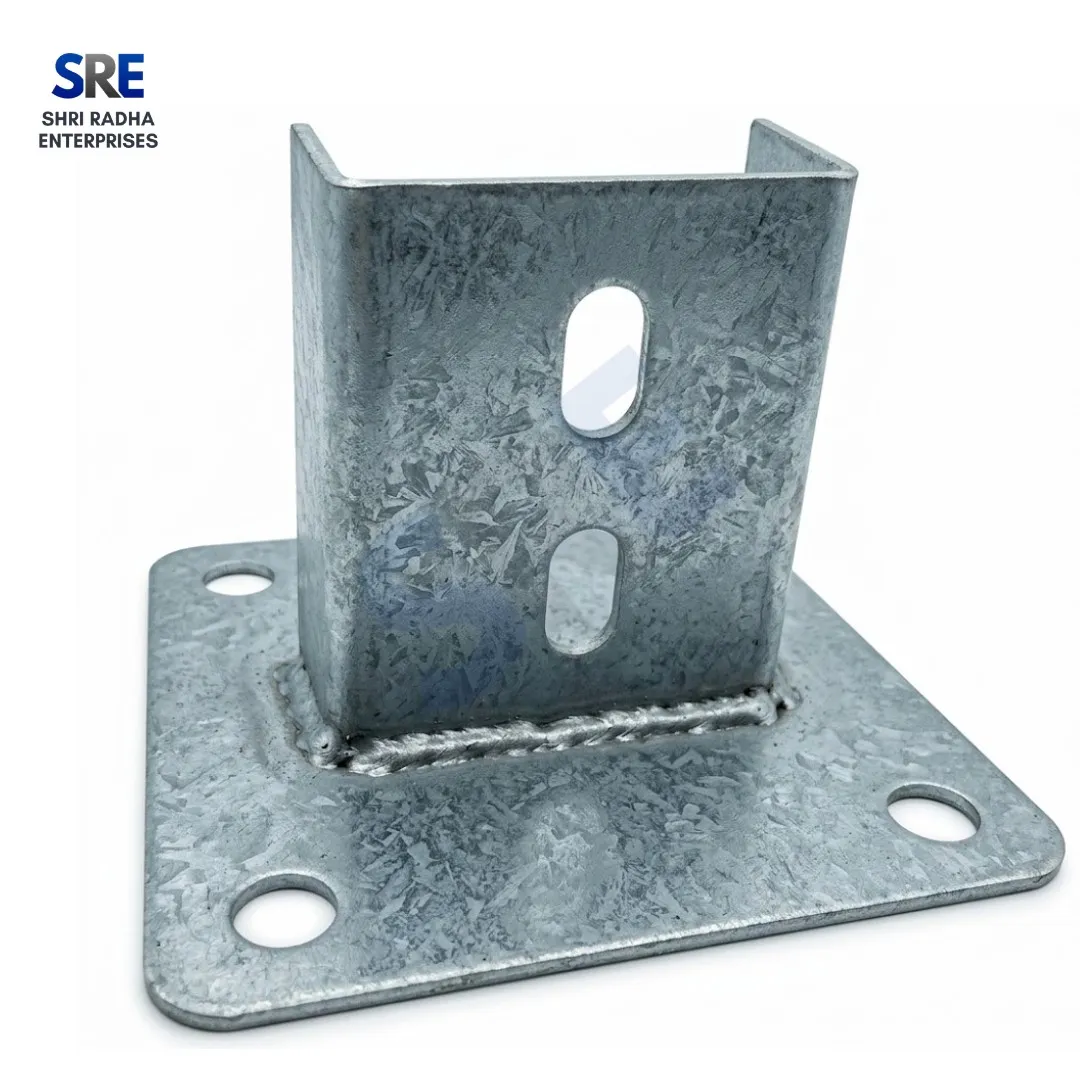
Applications of Solar Base Plates
Solar Base Plates are used in almost every type of solar mounting structure where a strong and stable connection between the structure and the foundation is required. Their primary purpose is to transfer structural loads safely while ensuring long-term stability and durability.
Depending on the project design, Solar Base Plates are widely used in the following applications:
Residential Rooftop Solar Systems
Residential rooftop installations require accurate alignment and reliable structural support. Solar Base Plates provide a secure connection between the mounting structure and the roof support, helping the system withstand daily operational loads and changing weather conditions.
Commercial Rooftop Solar Projects
Commercial buildings usually carry larger solar installations than residential projects. These systems demand stronger support structures capable of handling higher panel loads. Properly manufactured Solar Base Plates contribute to maintaining structural stability while reducing installation errors.
Industrial Solar Plants
Factories, warehouses, and industrial facilities often install high-capacity solar systems. These projects require heavy-duty Solar Base Plates with greater strength and durability to support larger mounting structures over extended service periods.
Ground Mounted Solar Projects
Ground-mounted solar systems rely heavily on foundation strength. Solar Base Plates connect the supporting columns to concrete foundations, helping distribute structural loads efficiently and improve overall system stability.
Utility Scale Solar Farms
Large solar farms consist of thousands of mounting structures operating under varying weather conditions. High-quality Solar Base Plates manufactured with accurate dimensions and corrosion-resistant finishes help ensure reliable long-term performance across these large installations.
Solar Car Parking Structures
Solar carports require strong structural support because they not only carry solar panels but also span open parking areas. Properly designed Solar Base Plates improve load distribution and structural integrity.
How to Choose the Right Solar Base Plate
Selecting the correct Solar Base Plate is essential for ensuring the safety, durability, and efficiency of your solar mounting structure. Instead of focusing only on price, buyers should evaluate several technical and practical factors.
Consider the Project Type
Different projects require different structural capacities.
- Residential Rooftop Projects
- Commercial Rooftop Installations
- Ground Mounted Solar Systems
- Utility Scale Solar Farms
- Industrial Solar Structures
Choosing the correct base plate according to the project type helps improve performance and long-term reliability.
Select the Correct Size
The size of the base plate should correspond to the structural member and foundation design.
Oversized or undersized plates may create alignment issues or unnecessary material costs.
Choose the Proper Thickness
Plate thickness directly influences load-bearing capacity.
Always select the thickness recommended in the structural design rather than choosing based solely on cost.
Check Hole Pattern Accuracy
Accurate hole positioning simplifies installation and reduces onsite modifications.
Precision punching also helps improve installation speed and bolt alignment.
Prefer Corrosion Protection
Outdoor solar structures remain exposed to rain, moisture, sunlight, and dust.
Choosing a galvanized Solar Base Plate significantly improves corrosion resistance and extends product life.
Buy from a Reliable Manufacturer
An experienced manufacturer can provide:
- Consistent quality
- Accurate dimensions
- Custom manufacturing
- Reliable delivery
- Technical support
- Bulk production capability
Common Mistakes Buyers Make
Many procurement teams focus only on the purchase price, overlooking factors that significantly affect installation quality and long-term performance.
Choosing Based Only on Price
The cheapest product may increase installation time, maintenance costs, and future replacement expenses.
Ignoring Manufacturing Quality
Poor punching, inaccurate dimensions, or weak welding can create problems during installation.
Selecting Incorrect Thickness
Using thinner plates than required may reduce structural performance.
Ignoring Surface Finish
Products without adequate corrosion protection may deteriorate faster in outdoor environments.
Ordering Without Technical Drawings
Providing accurate engineering drawings helps ensure the manufactured product matches the project requirements.
Maintenance Tips for Longer Service Life
Although Solar Base Plates require very little maintenance after installation, periodic inspection helps ensure long-term performance.
Recommended practices include:
- Inspect for corrosion during routine maintenance.
- Check anchor bolt tightness.
- Examine welded joints for any visible damage.
- Keep the surrounding area clean to prevent water accumulation.
- Replace damaged components if structural integrity is affected.
Proper maintenance can significantly extend the service life of the complete solar mounting structure.
Why Choose SRE Manufacturer?
At SRE Manufacturer, we understand that every solar project has unique structural requirements. Our focus is not only on manufacturing quality products but also on delivering solutions that help customers complete their projects efficiently.
Our Strengths
✔ Premium Mild Steel Manufacturing
✔ Precision Punching
✔ Accurate Hole Positioning
✔ Strong MIG Welding
✔ Smooth Burr-Free Finishing
✔ Galvanized Surface Finish
✔ Custom Manufacturing
✔ Bulk Order Support
✔ Competitive Factory Pricing
✔ Timely Delivery
✔ PAN India Supply
✔ Export Support
Whether you require standard Solar Base Plates or customized solutions based on engineering drawings, our team is committed to delivering products that meet your technical and commercial expectations.
Frequently Asked Questions (FAQs)
1. What is a Solar Base Plate?
A Solar Base Plate is a steel component used to connect solar mounting structures to a concrete foundation, ensuring structural stability and load distribution.
2. Which material is used?
Premium Mild Steel (MS), with galvanized finish available for enhanced corrosion resistance.
3. Can I order custom sizes?
Yes. We manufacture Solar Base Plates according to customer drawings and project specifications.
4. Is galvanization available?
Yes. Hot Dip Galvanized (HDG) finish is available for outdoor applications.
5. Do you support bulk orders?
Yes. Bulk manufacturing is available for EPC companies, distributors, and infrastructure projects.
6. What is the minimum order quantity?
The MOQ depends on the product specification and order requirements. Please contact us for project-specific quotations.
7. Do you export?
Yes. Export inquiries are welcome.
8. Can you manufacture OEM products?
Yes. OEM and custom manufacturing services are available.
9. Which industries use Solar Base Plates?
Residential, commercial, industrial, utility-scale solar projects, infrastructure, and solar mounting system manufacturers.
10. How do I get a quotation?
Share your required dimensions, thickness, quantity, and drawing (if available), and our team will provide a detailed quotation.
MNRE (Government)
BIS (Indian Standards)
Final Conclusion
Although a Solar Base Plate may seem like a simple steel component, it forms the foundation of every reliable solar mounting structure. The correct combination of material quality, manufacturing precision, accurate dimensions, proper surface finish, and quality inspection directly influences the strength, safety, and lifespan of the complete installation.
Whether you are developing a residential rooftop project or a utility-scale solar farm, selecting a trusted manufacturer ensures consistent quality and dependable performance.
At SRE Manufacturer, we combine precision manufacturing, custom engineering, and bulk production capabilities to deliver Solar Base Plates that meet the evolving needs of India's growing solar industry.
📞 Need High-Quality Solar Base Plates?
Looking for a trusted Solar Base Plate Manufacturer in India?
Contact SRE Manufacturer today for:
- Bulk Orders
- OEM Manufacturing
- Custom Sizes
- Galvanized Solar Base Plates
- Project-Based Solutions
- PAN India Supply
- Export Inquiries
Request a Quote Today and let us help build a stronger foundation for your next solar project.
Shri Radha Enterprises Team
We specialize in nylon rollers, sliding gate wheels, gate hardware, scaffolding items, cuplock systems, and accessories.