Brace Pin Safety: High-Altitude Scaffolding Locking Systems
Featured Products
Brace Pin Safety: The Tiny Toggle That Keeps a 40-Foot Scaffolding Matrix From Snapping
When tier-1 procurement managers, structural safety heads, and lead project engineers orchestrate safety parameters across massive commercial construction ecosystems, their attention naturally gravitates toward heavy, high-visibility components. They invest thousands of hours mapping out the wall-thickness of structural vertical standards, inspecting the mill certificates of load-bearing ledger pipes, and running digital torque checks on drop-forged right-angle couplers. Yet, in the unforgiving realm of advanced structural engineering, catastrophic site failure rarely begins with the massive beams. Instead, disasters almost always trace their roots back to the smallest, most overlooked mechanical component in the entire vertical matrix. In the scaffolding industry, that high-stakes component is the humble brace pin.
Imagine a massive, sprawling modular scaffolding grid towering over 40 feet into the sky against erratic high-altitude wind currents. The immense vertical dead loads—concrete formwork, heavy machinery, rebar pallets, and active labor crews—are carried efficiently by the vertical tubes. But vertical strength is completely useless if the structure lacks lateral stability. What stops that entire matrix from twisting, swaying dangerously, or folding entirely like a house of cards under dynamic shifting forces? The answer lies in the diagonal cross braces. And what holds those critical cross braces firmly anchored to the main frame? A tiny, highly engineered piece of steel known as the scaffolding brace lock pin. If this microscopic component fails, shears under load, or slips out due to site vibration, your entire lateral bracing system unlocks instantly. Within seconds, a multi-ton structural asset transforms into a swaying, unstable death trap—quietly triggering a catastrophic domino effect that no safety harness or mesh netting can ever intercept.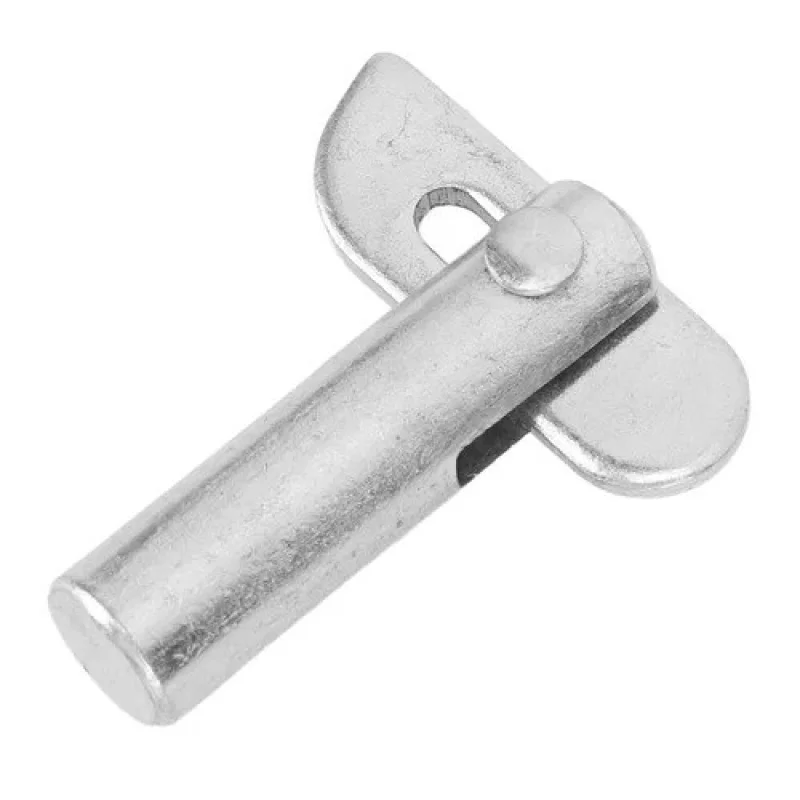
What Exactly is a Brace Lock Pin and What Does It Do?
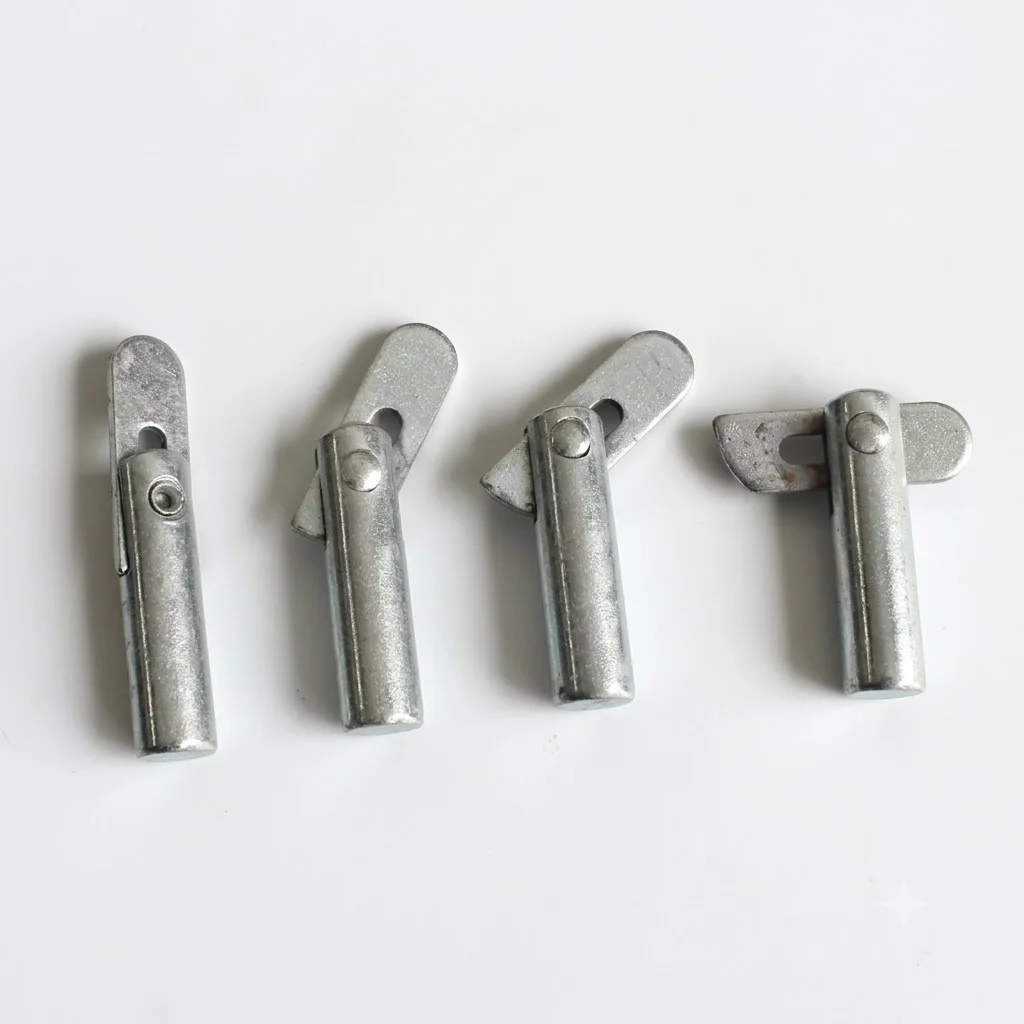
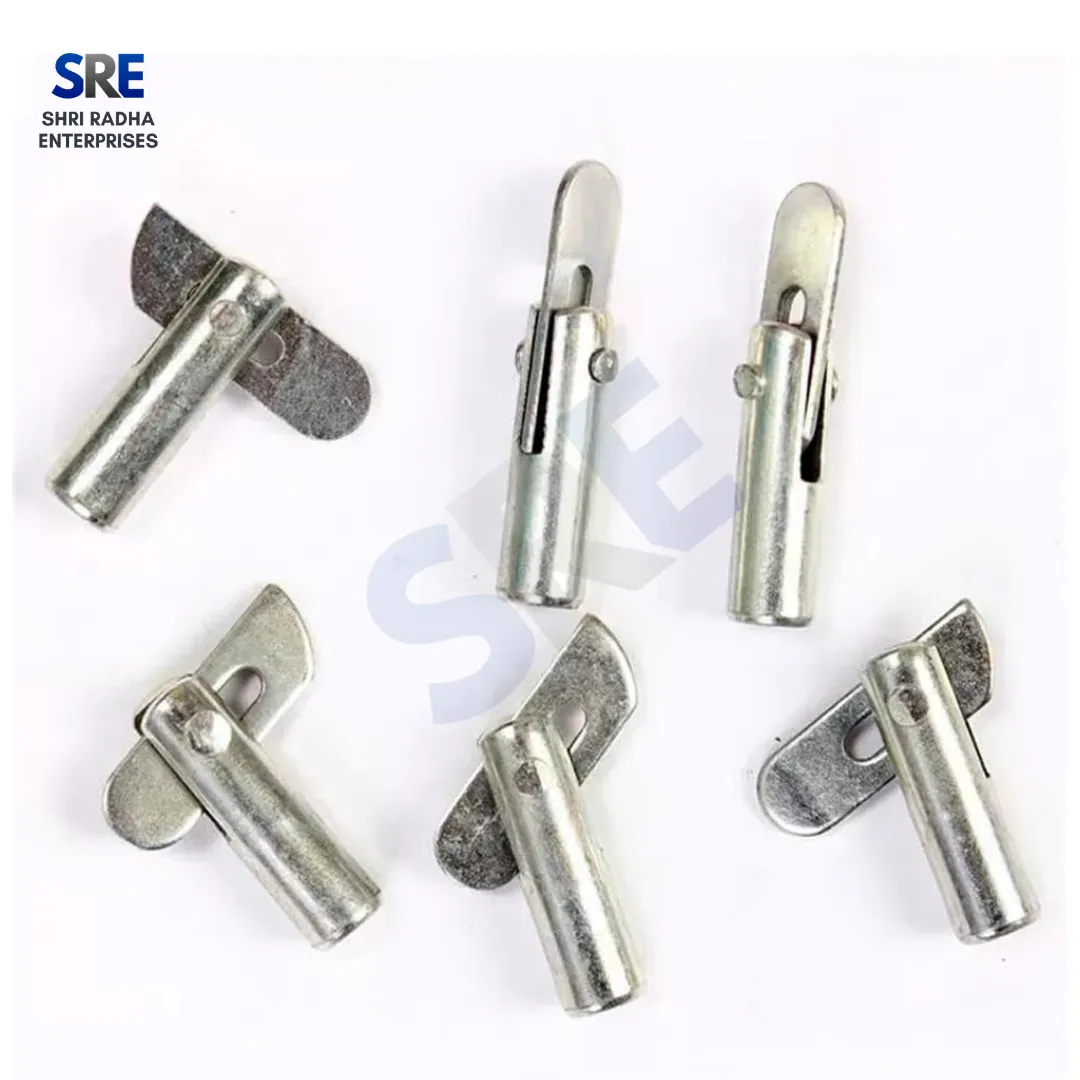
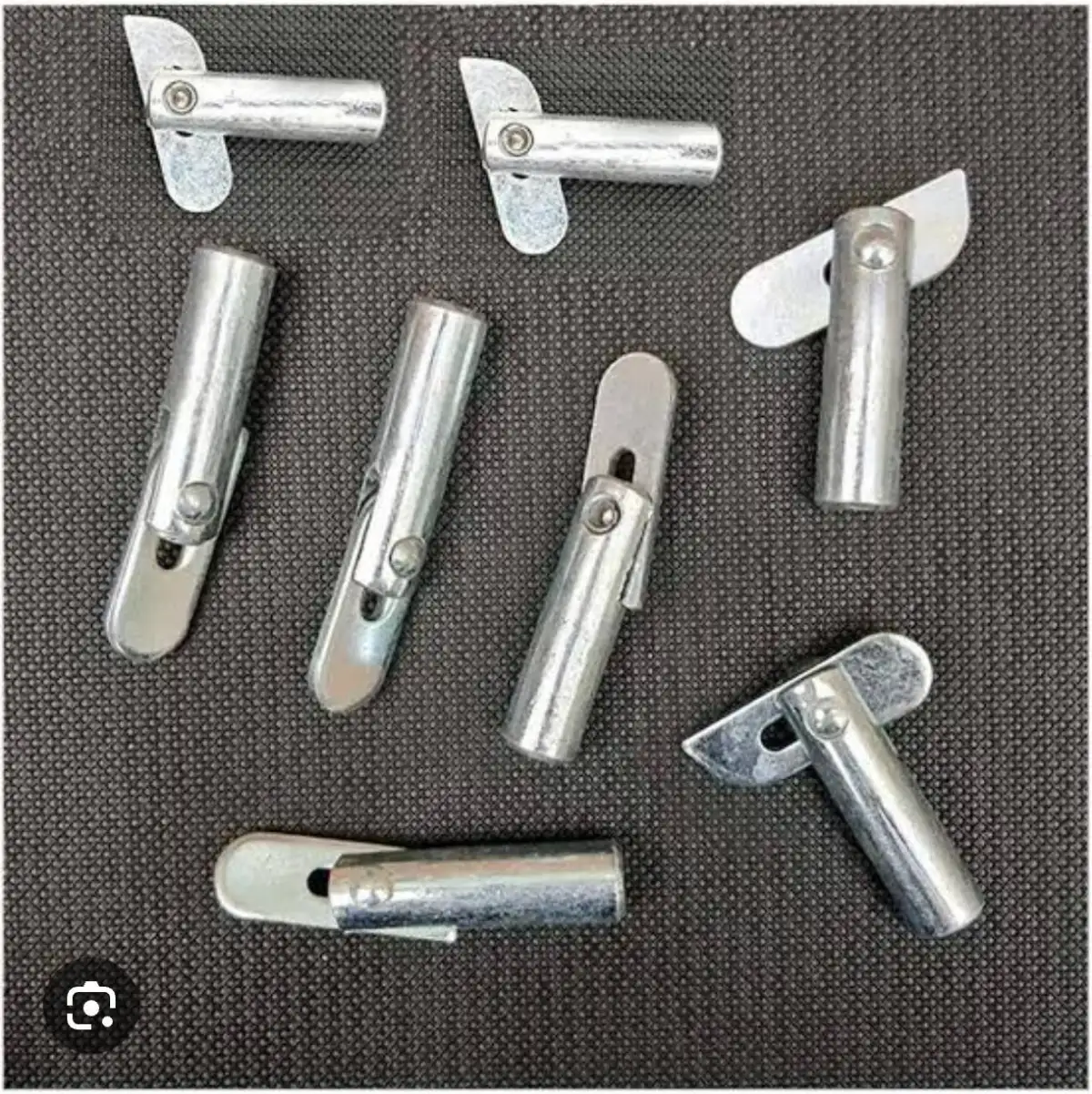
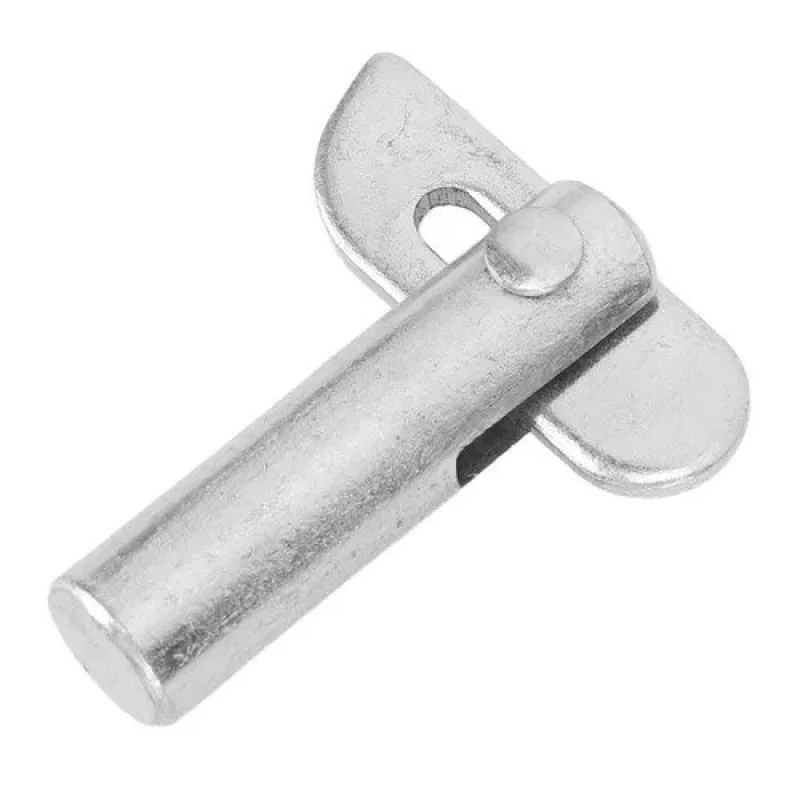
To the untrained eye or a low-cost local supplier, a brace pin (frequently designated as a flip-lock, gravity drop pin, or toggle pin) looks like a simple, low-value metal stub welded onto a scaffolding frame. However, from a structural loading perspective, it is a specialized, high-performance mechanical fastener engineered to perform a single, non-negotiable mission: Absolute Lateral Security.
1. The Male Receiving Anchor
The brace pin acts as the permanent, horizontal male stud mounted onto the vertical legs of scaffolding frames. When workers erect the scaffolding grid, the pre-fabricated circular holes or eyelets located at the extreme ends of diagonal cross braces slide directly over these pins. This interconnection creates the structural geometric triangle required to turn independent metal pipes into a rigid, non-shifting truss matrix.
2. Gravitational Fail-Safe Locking
Once the cross brace eyelet is pushed completely over the horizontal stem of the pin, an integrated gravity-activated toggle lip, drop-head, or flipper automatically flips downward by its own weight. This mechanism establishes an absolute physical barrier. Even if the scaffolding experiences extreme seismic shifts, massive dynamic loads, or sudden impacts, the cross brace cannot slide off the pin unless a human being manually lifts the gravity toggle.
3. The Vibration Dampener
Construction sites are incredibly violent environments. Heavy concrete vibrators, shifting personnel, traveling materials, and wind shears create continuous, high-frequency harmonic vibrations through the steel scaffolding tubes. A precision-engineered brace pin ensures that these relentless vibrations do not cause structural backing-out or micro-displacements at the cross brace junctions. Without this solid lock, the constant shaking would back the braces out of their mounts, causing immediate stability failure.
The Material Fraud and Dimension Trap on Active Sites
In the highly competitive B2B scaffolding market, many local traders and uncertified manufacturers win high-volume procurement contracts by playing a dangerous game: cutting production costs on minor hardware components. Because most project buyers audit the total weight of main vertical standards but rarely test the chemical composition of tiny fasteners, the brace pin becomes the prime target for heavy structural cost-cutting.
When an unverified supplier delivers sub-standard locking pins, they introduce two lethal structural vulnerabilities into your infrastructure project:
1. The Carbon Steel Deficit and Brittle Shearing Failure
A certified brace pin must be forged from premium structural carbon steel that possesses high tensile strength combined with structural elasticity. When cost-cutting vendors use cheap, uncertified scrap iron or low-grade rebar melts, the metal becomes highly brittle.
Under heavy wind loads, a covered or sheeted scaffolding structure acts like a giant sail, converting atmospheric currents into immense horizontal pulling force. This force travels down the diagonal cross braces and concentrates entirely as a sharp directional shearing force on the stem of the pin. If the steel lacks the correct chemical properties, it will experience a sudden, catastrophic brittle snap without warning, instantly disconnecting the lateral support system.
2. Superficial Surface Welds and the Pull-Out Risk
In a high-quality manufacturing setup, the brace pin is joined to the main vertical pipe using high-penetration automated welding systems that fuse the molecules of both components together. Local workshop traders, however, utilize manual, low-current arc welding done at rapid speeds. This creates a superficial, weak bead of metal that merely sits on the surface of the pipe.
When workers climb the scaffolding or wind forces pull the cross braces outward, a massive leverage tension is applied to the base of the pin. A weak surface weld will simply pop off or tear out of the frame tube entirely, creating an immediate structural vacancy that causes the surrounding grid to buckle under active loading.
Technical Specifications: Site-Certified Standards vs. Local Alternatives
When drafting your procurement mandates or evaluating supplier inspection reports, never accept vague descriptions like "standard locking pin." Your purchase orders should enforce strict, uncompromised structural parameters to ensure absolute site safety.
- Material Base: Low-cost local components use scrap iron or uncertified low-grade steel, whereas premium standards use high-tensile structural carbon steel.
- Manufacturing Process: Cheap alternatives rely on manual hand-cutting and die punching, while certified options utilize automated precision cold forging.
- Welding Integration: Sub-standard options utilize manual surface arc welding with high porosity, while site-certified hardware requires deep-penetration continuous MIG welding.
- Locking Mechanism: Low-cost variations have a rigid or stiff toggle prone to jamming, compared to a perfect-tolerance, free-falling gravity drop.
- Surface Protection: Uncertified vendors apply raw black steel or cheap primer paint, whereas premium pieces undergo heavy-duty zinc galvanization or electroplating.
- Rust Resistance: Cheap alternatives fail within 1 to 2 weeks of rainy exposure, while high-grade zinc-plated finishes provide long-term protection against water and concrete slush.
- Shearing Capacity: Local stubs have highly unpredictable capacities prone to sudden snapping, whereas certified hardware guarantees high-load lateral shearing resistance.
How to Correctly Deploy and Lock a Brace Pin on a Live Construction Site
Even the best-engineered structural hardware will fail if your on-site labor force handles the installation poorly. Enforcing a strict, non-negotiable deployment protocol during your morning safety tool-box talks is absolutely essential for eliminating human error.
Step 1: Perpendicular Alignment
Align the cross brace circular eyelet perfectly perpendicular with the horizontal axis of the pin. Do not force the brace at an awkward angle, as this can score the metal or bend the pin over time.
Step 2: Full Engagement
Lift the gravity toggle lip and slide the cross brace completely flush against the main vertical frame leg. There should be no visible gap between the brace eyelet and the base of the locking pin.
Step 3: Fail-Safe Gravity Drop
Release the toggle head. It must instantly drop down into its vertical position by its own weight. Never force, tape, or tie a pin in an open position. If the head does not drop freely, the mechanism is compromised.
The Golden Rule of Gravity Locks
Your on-site supervisors must inspect every single locking junction to ensure the gravity drop-head is dangling freely in its vertical position. If a pin is jammed upward due to dried concrete splatter or rust, workers must never attempt to bypass the lock by wrapping binding wire around the joint. A wired joint has zero certified mechanical holding capacity. If a pin is compromised, that specific scaffolding frame must be removed from circulation immediately.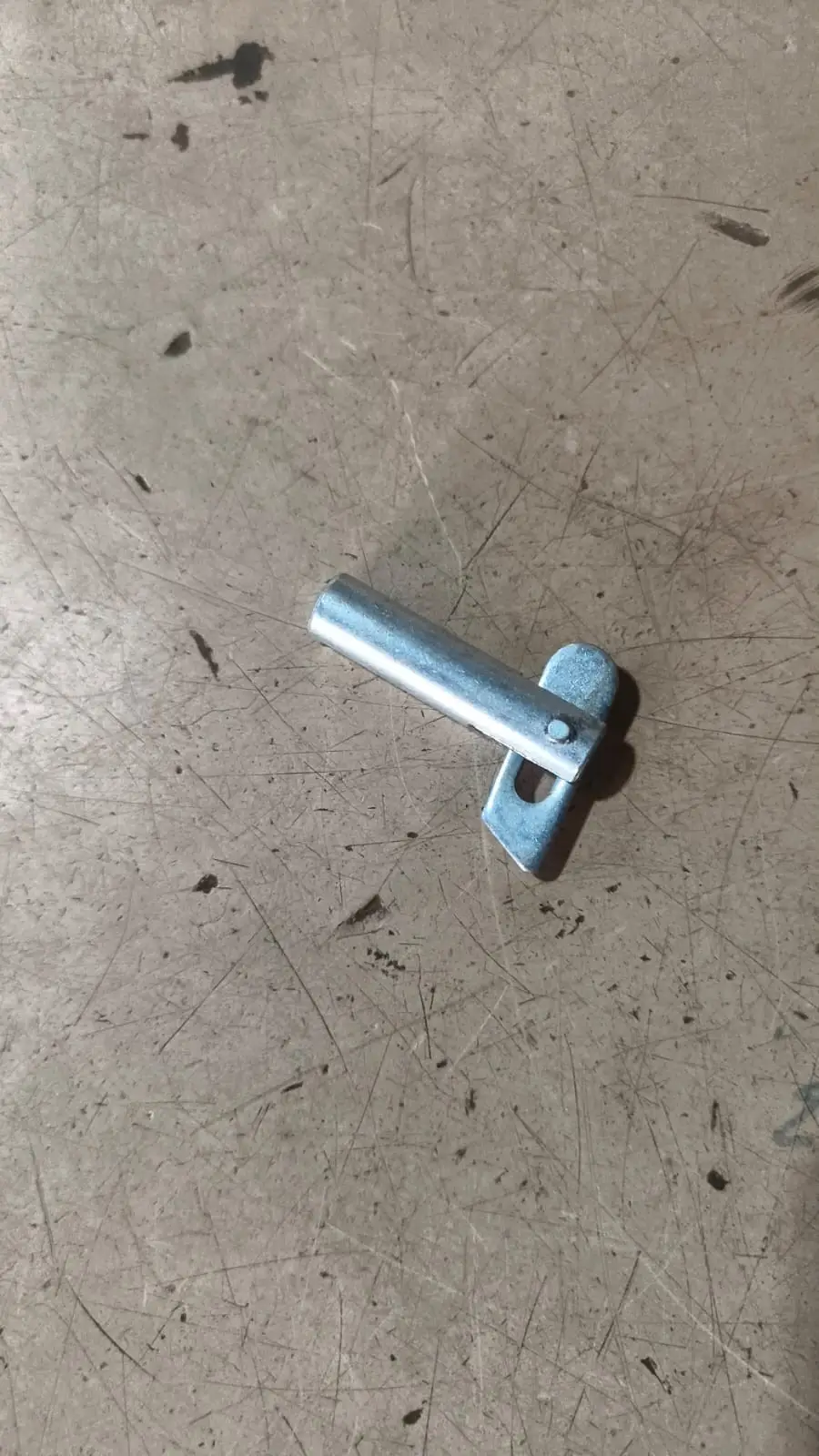
The 30-Second On-Site Quality Audit: A Guide for Procurement Heads
As a business owner, agency head, or commercial contractor, you cannot afford to wait for a structural failure to find out your supplier delivered sub-standard materials. When a logistics truck rolls onto your infrastructure site, your quality control team can easily run an intensive 30-second structural audit right at the vehicle bed using basic inspection tools:
Audit 1: The Toggle Gravity Freedom Test
Pick up five random scaffolding frames from the top, middle, and bottom of the delivery batch. Manually lift the gravity toggle flip-head of the brace pin to its highest position and let it go. The toggle must drop instantly, smoothly, and completely via gravity with absolutely zero resistance, catching, or manual pushing required. If the toggle sticks, the manufacturing tolerance is defective, and concrete dust will lock it permanently open on-site.
Audit 2: The Base Weld Porosity Inspection
Direct a high-intensity flashlight at the circular seam where the pin joins the vertical tube. Look closely at the metal bead. The weld bead must be thick, perfectly uniform, continuous, and glassy-smooth. If you spot tiny pinholes (porosity), black slag inclusions, or rough, splattered cracks, the weld is cold and weak. Reject the batch immediately; those pins will pop out under dynamic high-altitude cross loads.
Audit 3: The Zinc Coating Scratch Resistance Check
Take a hardened steel tool or a coin and firmly scrape the surface of the galvanized pin stem. The bright zinc finish should resist peeling or flaking off in large chunks. If a simple scrape reveals deep, raw black oxidized steel underneath a flaky layer of cheap silver paint, the supplier has faked the galvanization process to save money. The hardware will rust and freeze up within two weeks of field exposure.
Why Tier-1 Infrastructure Projects Choose Shri Radha Enterprises
At Shri Radha Enterprises, we do not view small hardware components as minor commodities or low-value afterthoughts. We recognize that the entire physical integrity of your multi-story structural grid—along with the lives of your working crews and your corporate compliance status—rests entirely on the reliability of that tiny locking mechanism.
Our advanced manufacturing facility operates under zero-compromise precision engineering protocols to deliver the safest components in the market:
- Automated Cold-Forging Systems: We eliminate all human measurement error by forming our pin stems using fully automated cold-forging machinery. This ensures that every single piece maintains identical, millimeter-perfect dimensions for seamless cross-brace compatibility.
- Deep-Fusion MIG Welding Excellence: Our frame fabrication lines utilize high-capacity MIG (Metal Inert Gas) welding systems. This guarantees a clean, deep-penetration molecular fusion between the pin base and the frame tube, providing maximum resistance against catastrophic pull-out or shearing stresses.
- Industrial-Grade Zinc Electro-Galvanization: Every single product undergoes a meticulous chemical cleaning and electro-galvanization process. This thick protective barrier ensures smooth, rust-free gravity drop-head performance even in highly corrosive environments, heavy monsoons, and messy concrete casting conditions.
- Complete Traceability and Transparency: We provide full transparency in material weights and structural grades. When you order from us, you pay for genuine structural steel that is engineered to be reused project after project, delivering exceptional long-term ROI for your business.
Frequently Asked Questions (FAQ)
Q1: Can a brace pin be safely replaced on-site if it breaks off a scaffolding frame?
No, it should never be welded on-site by ordinary laborers. Factory-grade pins are welded using automated, high-voltage, precise-current MIG systems in controlled environments to prevent the main frame tube from weakening or thinning due to excessive heat. On-site manual arc welding by uncertified structural laborers often creates brittle heat-affected zones, leading to sudden pipe buckling or weld failure under heavy concrete structural loads.
Q2: What is the primary cause of a brace pin jamming during a project?
The most frequent cause is dried concrete splatter, slurry leakage from formwork, or severe rust caused by cheap, ungalvanized steel. When liquid concrete enters the tight hinge mechanism of a sub-standard pin, it hardens and locks the toggle mechanism in place. Choosing premium zinc-galvanized pins by Shri Radha Enterprises ensures that materials slide off cleanly, keeping the mechanism operational.
Q3: How do cross braces behave if a brace pin fails on a high-altitude platform?
If a pin fails, the diagonal cross brace loses its anchor point and immediately slides off. This completely breaks the load-transfer triangle of the scaffolding tower. Without lateral support, the vertical standards will begin to bow outward or inward under load. If another pin fails due to the redistributed stress, a high-altitude domino effect is triggered, causing the entire modular grid to buckle sideways instantly.
Q4: Why shouldn't we use standard nuts and bolts instead of a gravity flip pin?
While a high-grade nut and bolt provides a strong mechanical lock, it is highly inefficient for fast-paced commercial construction projects. Manually tightening thousands of nuts and bolts across a multi-tier structure requires hundreds of additional labor hours, requires specialized tools, and introduces a massive margin for human error (such as loose or forgotten nuts). A gravity-activated pin locks completely automatically in a fraction of a second without tools, maximizing speed without sacrificing safety.
Conclusion: Protect Your Site Assets from the Bottom Up
In the world of commercial infrastructure development, industrial manufacturing, and high-altitude engineering, your project's reputation cannot afford a weak link. A single, catastrophic structural collapse caused by a cheap, sheared fastening pin can completely derail your timelines, expose your organization to massive legal liabilities, and result in immediate regulatory site shutdowns. True structural safety means paying absolute attention to the smallest details of your foundation and locking systems.
Don't let uncertified, brittle, and sub-gauge hardware threaten the integrity of your hard work. Build your projects on an indestructible foundation of precision engineering, absolute material weight honesty, and fail-safe safety standards.
Contact the technical sales desk at Shri Radha Enterprises today to secure mill-certified, high-performance scaffolding assets designed to protect your crew, your investments, and your timelines from frame to lock.
Shri Radha Enterprises Team
We specialize in nylon rollers, sliding gate wheels, gate hardware, scaffolding items, cuplock systems, and accessories.