Ledger End Safety: High-Load Modular Scaffolding Connections
Featured Products
The Structural Axis: Why Your Modular Scaffolding Integrity Relies Entirely on the Ledger End
When supervising multi-story infrastructure projects, modern commercial contractors increasingly move away from traditional, slow-moving tube-and-coupler systems in favor of high-velocity modular scaffolding systems. Whether you are executing a heavy industrial grid, an urban commercial high-rise, or a massive bridge girder support matrix, modular engineering allows your team to erect and dismantle towering structures in a fraction of the traditional time. However, this high-speed modular architecture creates a massive concentration of physical forces. While the vertical standards manage the downward gravitational crushing forces, the horizontal components—the ledgers—are responsible for preventing structural buckling, maintaining perfect right-angle geometry, and resisting severe lateral shifting.
At the absolute center of this horizontal connection point sits a critical, high-load component: the ledger end. Every single horizontal beam across a modular grid relies on this specialized casting to bridge the gap between the horizontal pipe and the vertical rosette or cup ring. If this connection point experiences even a microscopic fracture, your horizontal framework unlocks under pressure, causing a sudden redistribution of load that can trigger a progressive, high-altitude structural failure.
What is a Ledger End and What is Its Engineering Purpose?
In modern industrial modular scaffolding, a ledger end is a heavy-duty engineered casting permanently welded onto both ends of a horizontal pipe or runner. It serves as the physical mechanical hand that grips the vertical standard's rosette, flange, or ring system.
  HORIZONTAL PIPELINE ----> [ WELDING RING ]
                            [   LEDGER END   ] (Component in image_227986.png)
                                 ||  |
                                 ||  V  <-- Wedge Slot Interlocks Here
                            ================
                            VERTICAL ROSETTE
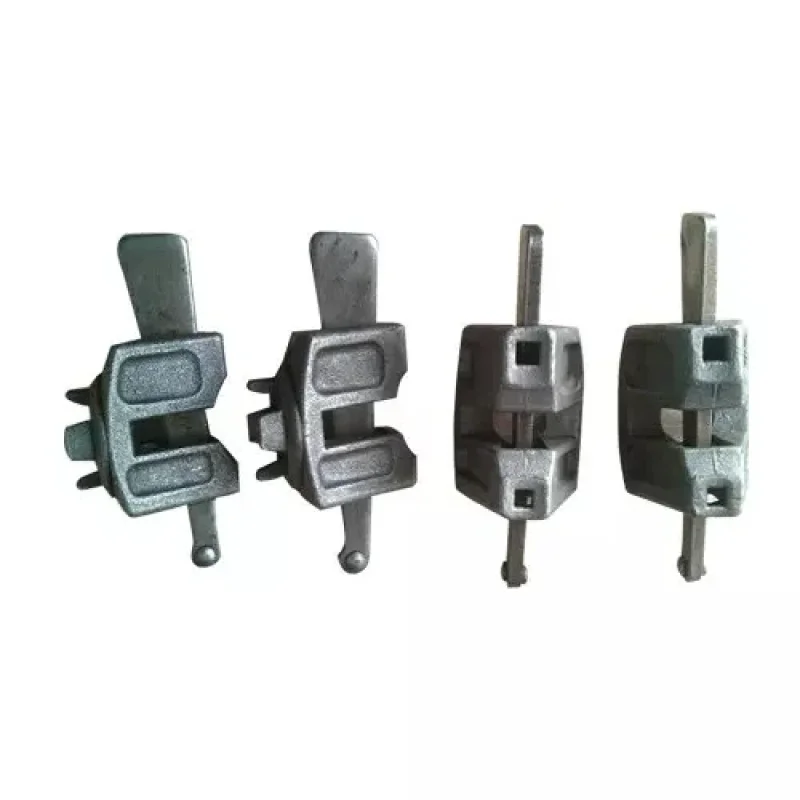
As clearly displayed in the structural product profile of image_227986.png, the component features a highly intentional, dual-purpose geometry. The upper cylindrical collar provides a deep, precision-machined receiving channel where the raw steel horizontal ledger pipe sits perfectly flush before undergoing automated factory welding. The lower section splits into a heavy, reinforced pronged configuration designed with an integrated vertical slot. This precise slot allows the component to drop seamlessly over the horizontal plane of a vertical rosette, forming an immediate, interlocking connection that restricts multi-directional movement.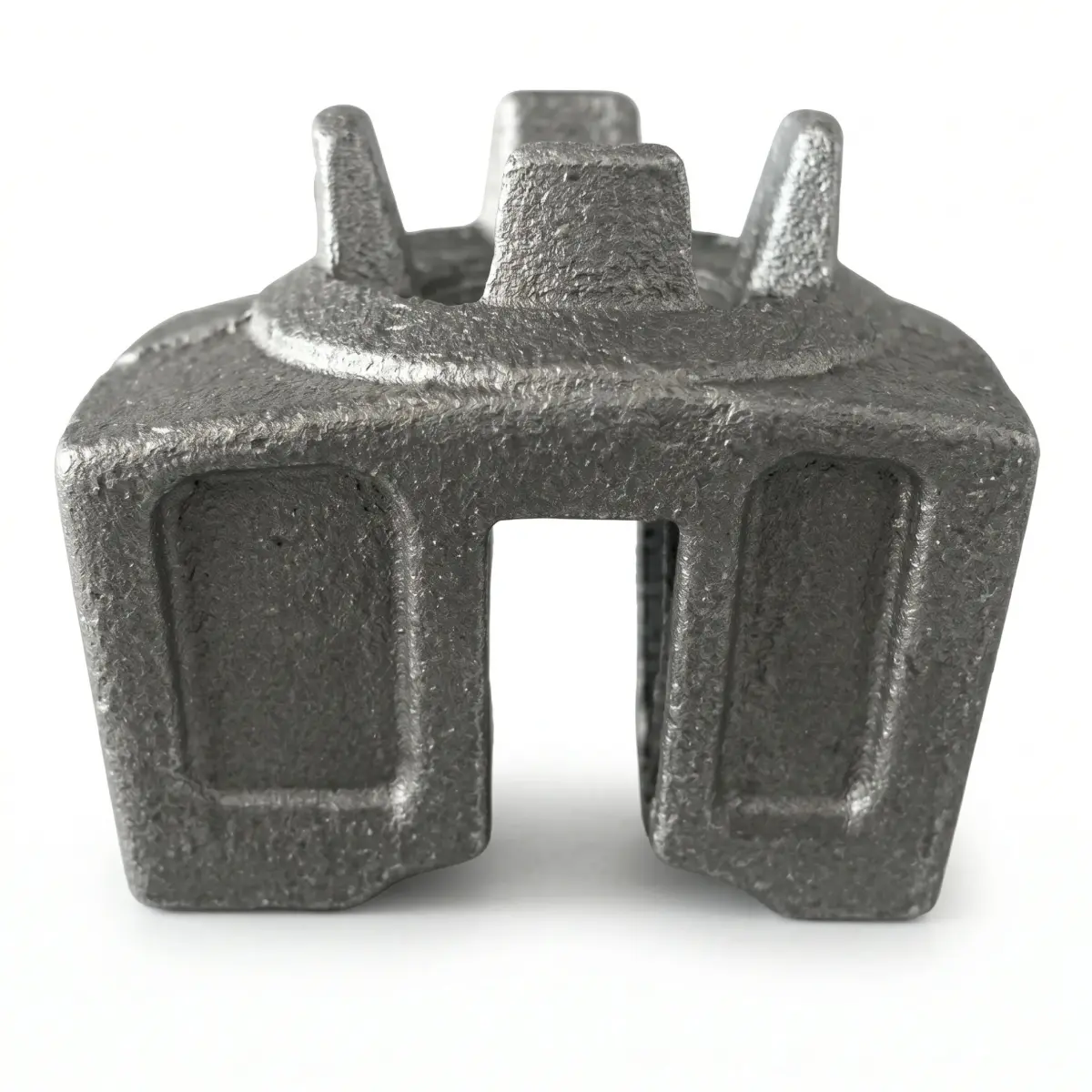
The primary engineering responsibilities of this component include:
1. High-Tensile Right-Angle Restraint
When concrete is poured into overhead slabs, the down-bearing force tries to push the vertical scaffolding standards outward. The horizontal ledgers prevent this outward bowing by acting as a tension tie. The component must withstand thousands of kilograms of direct tensile (pulling) force without snapping or shearing at the joint profile.
2. Perfect Grid Alignment
A modular system relies on absolute 90-degree geometry to distribute loads safely. A poorly molded or inaccurately dimensioned component introduces loose tolerances at the connection junction. This creates a dangerous condition known as "scaffold play," where the entire multi-tier tower can sway or twist under dynamic working conditions.
3. Rapid Wedge-Lock Compression
The central slot running through the body of the casting is meticulously calculated to receive a heavy steel wedge pin. Once the component drops into the rosette, the wedge pin is driven home with a hammer, converting a temporary alignment into a high-compression, vibration-proof friction lock that cannot back out during heavy site operations.
The Hidden Stress Points: Analyzing the Casting Profile
When you examine the physical hardware profile in image_227986.png, you can instantly see why this component requires premium metallurgy rather than cheap fabrication. The wide, flared shoulders of the casting are intentionally reinforced with recessed triangular structural webs. These geometric indentations are not decorative; they are engineered stress-distribution channels designed to channel heavy lateral forces away from the hollow welded pipe neck and down into the solid core of the vertical standard.
During active concrete casting or heavy stone masonry work, horizontal beams do not just experience flat downward pressure. They are subjected to complex, multi-axis twisting forces (torsion) caused by workers moving equipment, heavy winds pushing against safety netting, and localized structural settling. If the casting does not match the exact internal thickness and smooth radius curves shown in image_227986.png, these concentrated forces will pool at the sharpest corners of the slot, creating micro-fissures that split the hardware wide open under full load.
At Shri Radha Enterprises, we treat these horizontal anchoring components with the absolute engineering respect they deserve. We understand that a single weak link at a horizontal junction can destabilize an entire modular tier. That is why our production lines focus on absolute dimensional consistency, ensuring that every piece delivers a rock-solid, zero-wobble fit against your vertical standards.
The Casting Fraud: Malleable Cast Iron vs. Premium SG Iron and Investment Cast Steel
In the highly competitive B2B Indian procurement landscape, many local traders and uncertified foundries try to underbid certified factories by exploiting the material composition of the ledger end. To an ordinary procurement officer, two castings might look identical when coated with a fresh layer of grey silver primer or zinc plating. However, underneath that thin cosmetic surface lies a massive difference in metallurgical integrity that dictates whether your scaffolding handles load or shatters under pressure.
Low-cost suppliers predominantly use cheap, brittle Malleable Cast Iron or low-grade scrap iron melts. While malleable iron is easy to pour into crude sand molds and keeps production costs incredibly low, it possesses a high concentration of flaky carbon microstructures. This makes the metal structurally brittle under sudden impacts or dynamic lateral loads.
When a worker drops a heavy steel beam onto a horizontal ledger runner, or when a wind storm creates sudden twisting tension across the grid, a brittle malleable iron casting cannot flex or absorb the energy. Instead, it experiences a catastrophic failure known as snap fracturing, splitting right across the center of the wedge slot and dropping the horizontal beam entirely.
To protect your infrastructure site from these hidden risks, a premium, site-certified component must be manufactured from either Spheroidal Graphite (SG) Iron (also known as Ductile Iron) or precision Investment Cast Carbon Steel.
SG Iron contains microscopic carbon nodules rather than jagged flakes, which prevents internal cracks from traveling through the metal body. This specialized atomic structure allows the hardware to handle immense tensile stresses and shock loads without cracking, bending plastically under extreme overload rather than snapping clean.
Furthermore, investment casting ensures that the internal surfaces of the receiving channel and the wedge slot are perfectly smooth and devoid of hidden air pockets (blowholes) that naturally weaken standard sand-cast alternatives.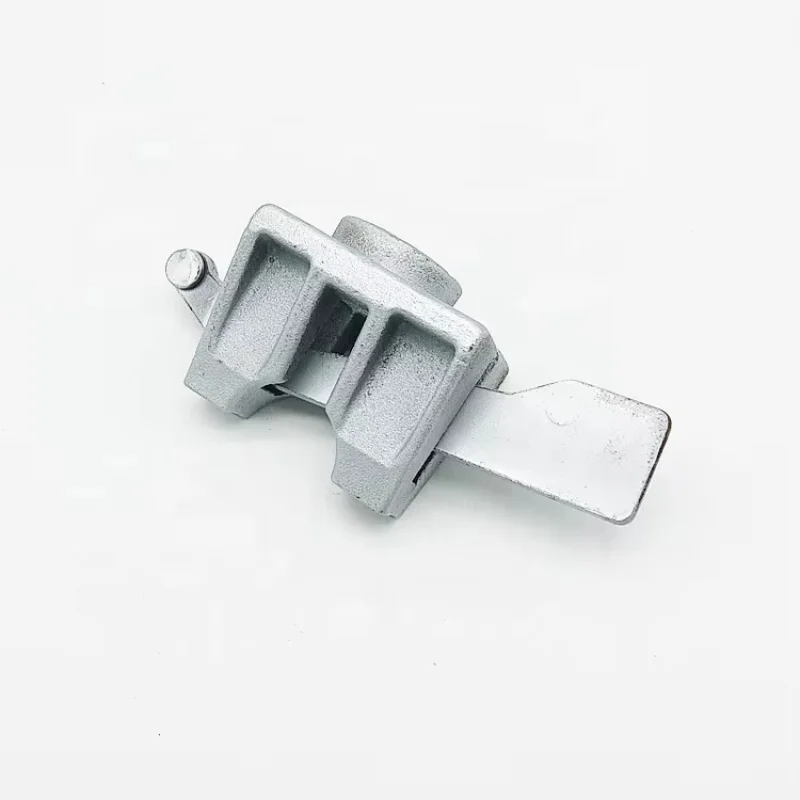
Technical Specifications: Site-Certified Standards vs. Local Scrap Castings
When drafting your bulk procurement mandates or cross-checking factory test certificates before a major delivery, you must mandate clear, uncompromised metallurgical benchmarks. Never allow suppliers to dump uncertified, raw scrap iron castings onto your high-stakes commercial infrastructure site.
The parameters below highlight the strict engineering differences that dictate the performance of your modular horizontal connections:
- Material Composition: Low-cost local components are made from brittle malleable cast iron or recycled scrap iron. Certified premium standards require high-grade Spheroidal Graphite (SG) Iron (Grade 450/10 or 500/7) or Investment Cast Carbon Steel.
- Manufacturing Process: Cheap alternatives use crude, low-cost green sand molding which leaves a rough surface finish and hidden internal blowholes. Premium alternatives utilize automated shell-molding or precision investment casting lines for 100% molecular density.
- Internal Structural Defect Risk: Local options have a very high risk of internal porosity, sand inclusion, and air pockets that create immediate structural weak spots. Certified hardware guarantees zero internal voids, verified via strict factory ultrasonic testing.
- Tensile Strength Capacity: Uncertified components offer highly unpredictable tensile strength, frequently failing under sudden lateral pulling loads. Premium hardware delivers a minimum certified tensile strength of 450 to 500 MPa, easily handling intense tension ties.
- Impact Resistance: Brittle scrap iron snaps instantly when struck heavily by hammers during wedge pin locking. High-grade ductile steel handles hard, repetitive hammer impacts on-site without chipping or cracking.
- Dimensional Consistency: Manual sand molds warp over time, leading to loose, shaking connections inside the vertical rosette slot. Precision engineering ensures sub-millimeter tolerances for a perfect, zero-wobble friction lock every single time.
- Welding Compatibility: Low-grade cast iron is notoriously difficult to weld, causing weak, brittle weld joints at the pipe connection. Premium cast carbon steel features a specialized low-carbon neck design optimized for flawless, deep-penetration automated factory welding.
The Critical Role of the Upper Pipe-Receiving Neck Profile
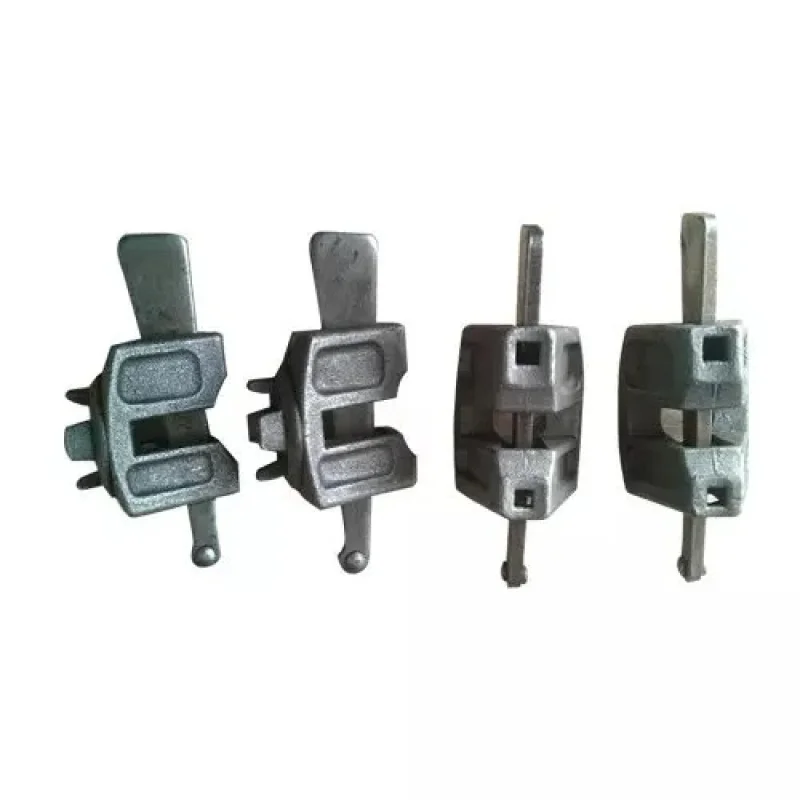
Look closely at the cylindrical upper collar profile displayed in the image of the component. This neck section is the exact zone where your raw steel ledger pipe is pushed into the casting before undergoing high-amperage continuous welding.
If this neck diameter is even a fraction of a millimeter too loose or out of round, the horizontal pipe will sit unevenly inside the channel during the welding process. This creates a highly dangerous defect known as weld eccentricity.
When the completed ledger runner is deployed on a live construction site and subjected to heavy downward concrete loads, that uneven gap concentrates all the mechanical stress onto one single side of the weld seam.
Because the cheap casting lacks a smooth, uniform radius at its seat, the weld line will experience rapid stress fatigue and peel right off the pipe.
At Shri Radha Enterprises, our automated machining lines profile the internal receiving channel of every single casting to ensure a seamless, snug, concentric fit with your standard scaffolding pipes, maximizing the sheer load capacity of the final welded component.
The 30-Second On-Site Quality Audit: A Guide for Procurement Heads
As a business owner, agency head, or commercial contractor, you cannot afford to wait for a structural failure to find out your supplier delivered sub-standard materials. When a logistics truck rolls onto your infrastructure site, your quality control team can easily run an intensive 30-second structural audit right at the vehicle bed using basic inspection tools:
Audit 1: The Ring Alignment and Slot Clearance Test
Pick up five random horizontal ledger runners from different areas of the delivery batch. Take a standard vertical rosette or cup ring and drop the ledger end casting directly into the slot. The casting must slide into place smoothly and sit completely flush against the curved radius of the vertical pipe without requiring any forceful twisting, forcing, or hammering. If the slot binds or shakes loosely, the casting mold is defective, which will cause your entire scaffolding grid to warp out of line during high-altitude assembly.
Audit 2: The Sound Resonance Test (The Ring Test)
Take a solid metal hammer and gently tap the side shoulder of the casting. Listen closely to the pitch of the sound produced. A premium, high-density Spheroidal Graphite (SG) Iron or Investment Cast Steel component will produce a clear, high-pitched, ringing metallic echo because its internal molecular structure is uniform and free of voids. If the casting produces a dull, flat, hollow "thud," it indicates that the metal is brittle malleable iron or contains large hidden internal air pockets (blowholes) that will cause it to snap under heavy concrete structural loads.
Audit 3: The Weld Seam Perfection Check
Examine the circular junction where the casting neck meets the raw horizontal pipe. The weld bead must be thick, completely continuous, uniform, and free of tiny surface pinholes or black slag deposits. If you see an irregular, bumpy, or incomplete manual weld line, it means the factory skipped automated welding to save time. These weak joints will quickly break or tear away under intense lateral tension forces on-site.
Why Tier-1 Infrastructure Projects Choose Shri Radha Enterprises
At Shri Radha Enterprises, we do not view small hardware components as minor commodities or low-value afterthoughts. We recognize that the entire physical integrity of your multi-story structural grid—along with the lives of your working crews—rests entirely on the engineering reliability of every single horizontal connection point.
Our advanced manufacturing facility operates under zero-compromise precision engineering protocols to deliver the safest modular scaffolding components in the market:
- Automated Shell-Molding and Precision Castings: We eliminate manual sand-casting defects by utilizing automated manufacturing lines, ensuring that every single casting matches the exact internal dimensions and smooth radius curves required for a zero-wobble fit.
- Deep-Fusion MIG Welding Excellence: Our fabrication lines utilize high-capacity automated MIG (Metal Inert Gas) welding systems to guarantee clean, deep-penetration molecular fusion between the casting neck and the horizontal pipe, preventing any risk of weld peeling or stress fatigue.
- High-Grade Zinc Electro-Galvanization: Every single component undergoes a rigorous chemical cleaning and electroplating process, providing a heavy-duty protective barrier that ensures long-term rust resistance against water, continuous rain, and messy concrete slush.
- Complete Material and Weight Transparency: We provide full transparency in material grades and structural weights, ensuring you pay for genuine structural steel that is engineered to be reused project after project, delivering exceptional long-term ROI for your business.
Frequently Asked Questions (FAQ)
Q1: Can a cracked ledger end be repaired by manual arc welding on-site?
No, it should never be welded or repaired on-site by ordinary laborers. Industrial-grade castings are manufactured from specialized carbon steel or ductile iron that requires precise pre-heating, specific welding electrodes, and controlled cooling cycles to maintain structural integrity. Quick manual arc welding on an active site creates high internal stresses and brittle heat-affected zones, causing the casting to snap even faster under future structural loading.
Q2: What is the main danger of using cheap malleable cast iron ledger ends?
The primary danger is a sudden, catastrophic "snap fracture" without warning. Unlike ductile iron or cast steel, which can bend slightly under immense overload, brittle malleable iron cracks instantly when subjected to heavy impacts, shifting concrete weight, or high-velocity wind shears. This can drop an entire horizontal beam section, causing a localized platform failure.
Q3: Why is dimensional consistency so critical for this component?
Modular scaffolding relies on perfect 90-degree geometry to transfer loads safely down to the ground. If the internal dimensions of the casting slot or receiving neck vary by even a millimeter due to warped manual molds, the horizontal pipes will shake inside the vertical rosettes. This creates an unstable structural condition known as "scaffold play," which causes towering platforms to sway dangerously.
Q4: How does a wedge-lock mechanism compare to standard bolt connections?
The wedge-lock design utilized by premium ledger ends provides superior speed and vibration resistance. Tightening thousands of nuts and bolts across a modular grid requires specialized tools and hundreds of extra labor hours, leaving a large margin for human error (loose nuts). A wedge system allows workers to drive a steel wedge pin home with a single hammer strike, creating an instant, high-compression friction lock that cannot loosen under severe site vibrations.
Conclusion: Secure Your Horizontal Assets with Precision Engineering
In the high-stakes world of commercial infrastructure development, industrial manufacturing, and high-rise construction, your project's reputation cannot afford a weak link. A single horizontal connection failure caused by a cheap, brittle, or poorly welded component can completely derail your execution timelines, expose your organization to massive legal liabilities, and result in immediate regulatory site shutdowns. True site safety means paying absolute attention to the material integrity of every interlocking junction.
Don't let uncertified, sub-standard, and porous castings compromise the stability of your hard work. Build your projects on an indestructible foundation of precision engineering, absolute weight honesty, and fail-safe safety standards.
Contact the technical sales desk at Shri Radha Enterprises today to secure mill-certified, high-performance scaffolding assets designed to protect your crew, your investments, and your construction timelines from frame to lock.
Shri Radha Enterprises Team
We specialize in nylon rollers, sliding gate wheels, gate hardware, scaffolding items, cuplock systems, and accessories.