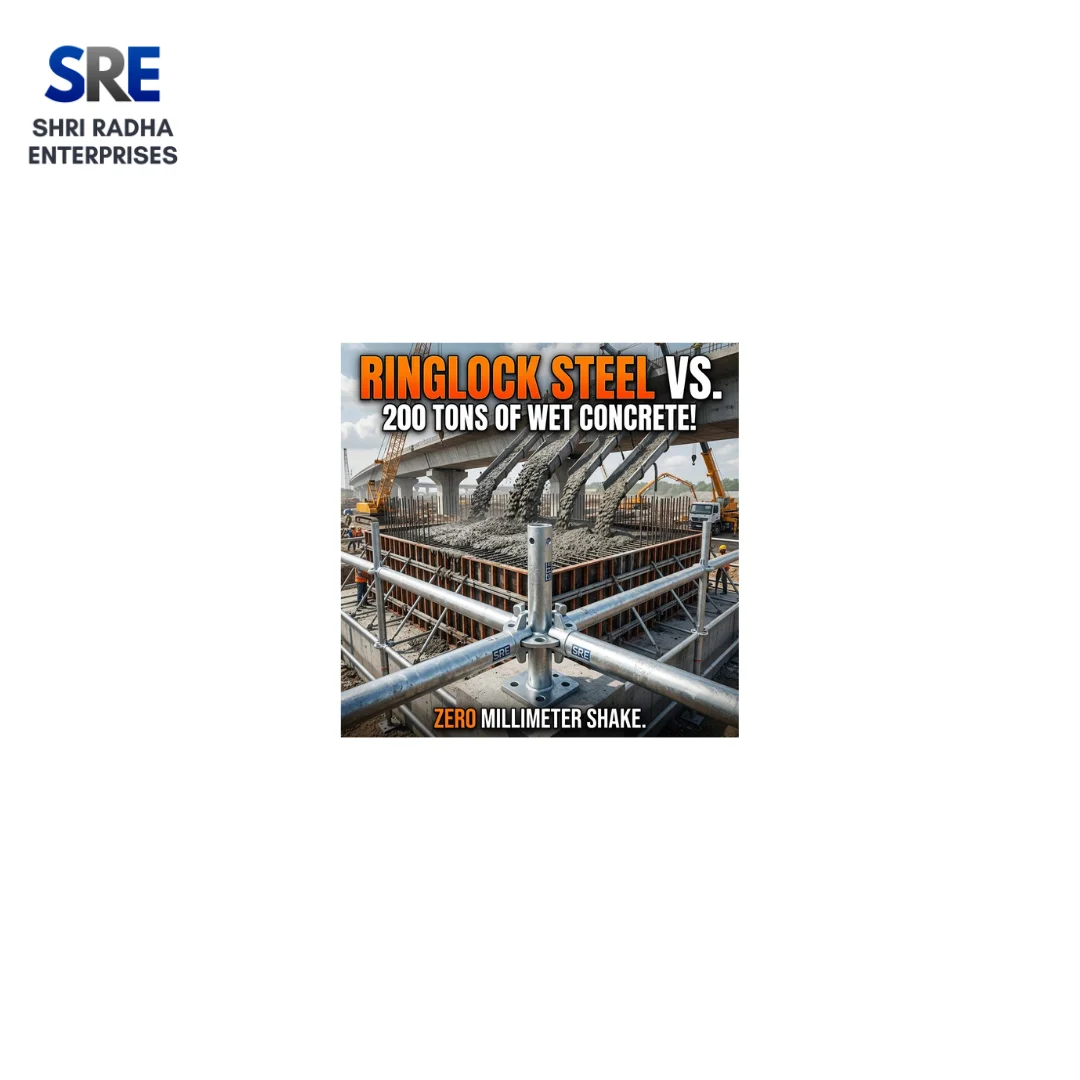
Ringlock Steel vs. 200 Tons of Wet Concrete: Zero Millimeter Shake.
Featured Products
The Structural Core: Why Heavy Infrastructure Relies on the Ringlock Vertical Standard
When managing high-stakes commercial infrastructure projects, urban high-rises, or heavy industrial builds, ordinary scaffolding systems quickly hit their engineering limits. Traditional tube-and-clamp setups or basic cuplock frames simply cannot deliver the immense load-bearing capacity, multidirectional flexibility, and rapid assembly speeds required on a modern job site. This is exactly why Tier-1 engineering firms and commercial contractors across India have transitioned to modular ringlock scaffolding—a system engineered to handle extreme stress without breaking a sweat.
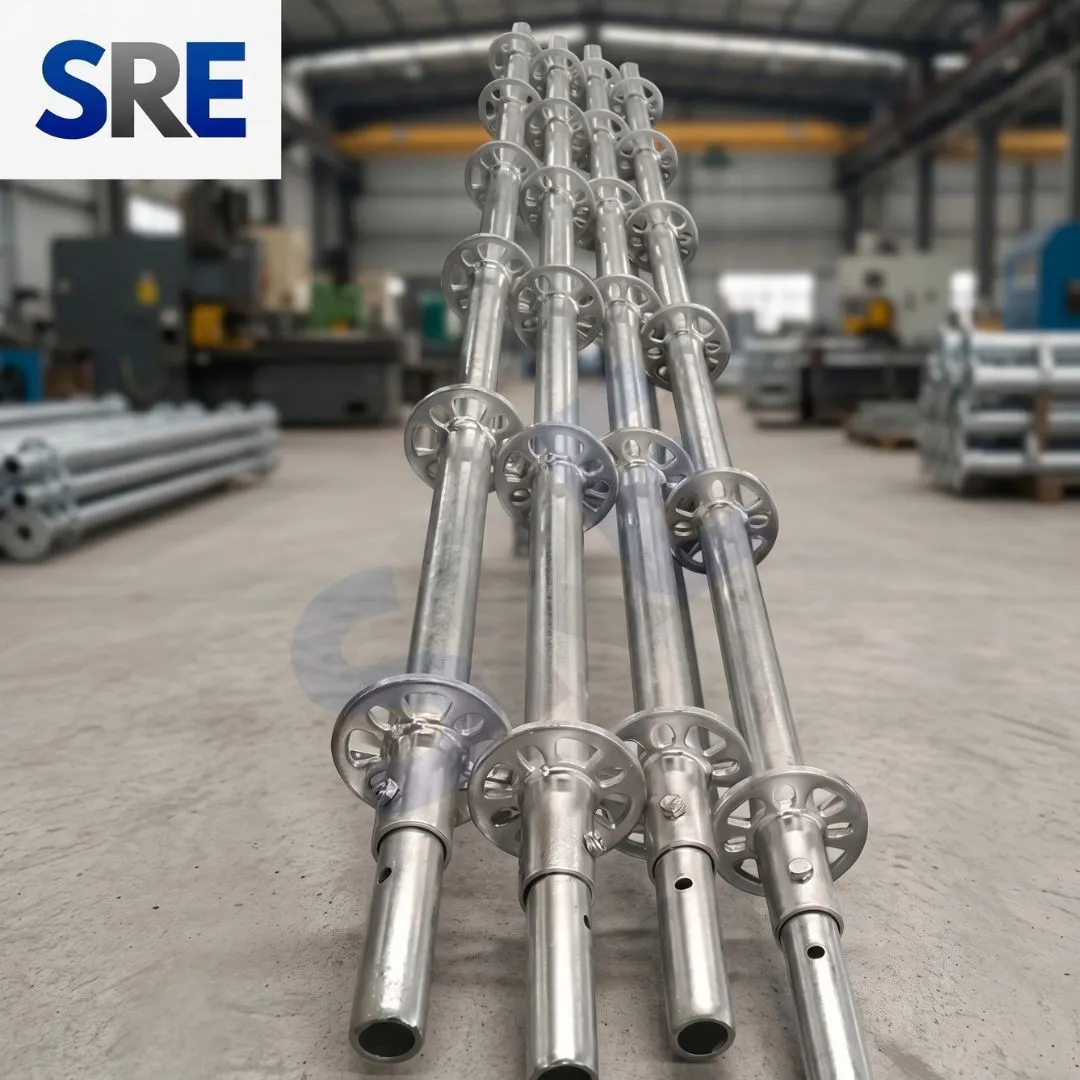
At the absolute center of this structural matrix is the Ringlock Vertical, also known as the standard. The vertical standards act as the primary load-bearing pillars of the entire scaffolding tower, transferring thousands of kilograms of dead and live weight safely down to the base plates. Featuring integrated, circular ring rings (rosettes) spaced at strict 500mm intervals, these heavy-duty tubes dictate the overall alignment, stability, and safety of the working platform. If a single vertical standard fails, undergoes eccentric bending, or cracks at a joint under high-altitude concrete loads, it triggers a catastrophic structural failure. Understanding the engineering behind this component is the first step toward securing an accident-free, highly efficient job site.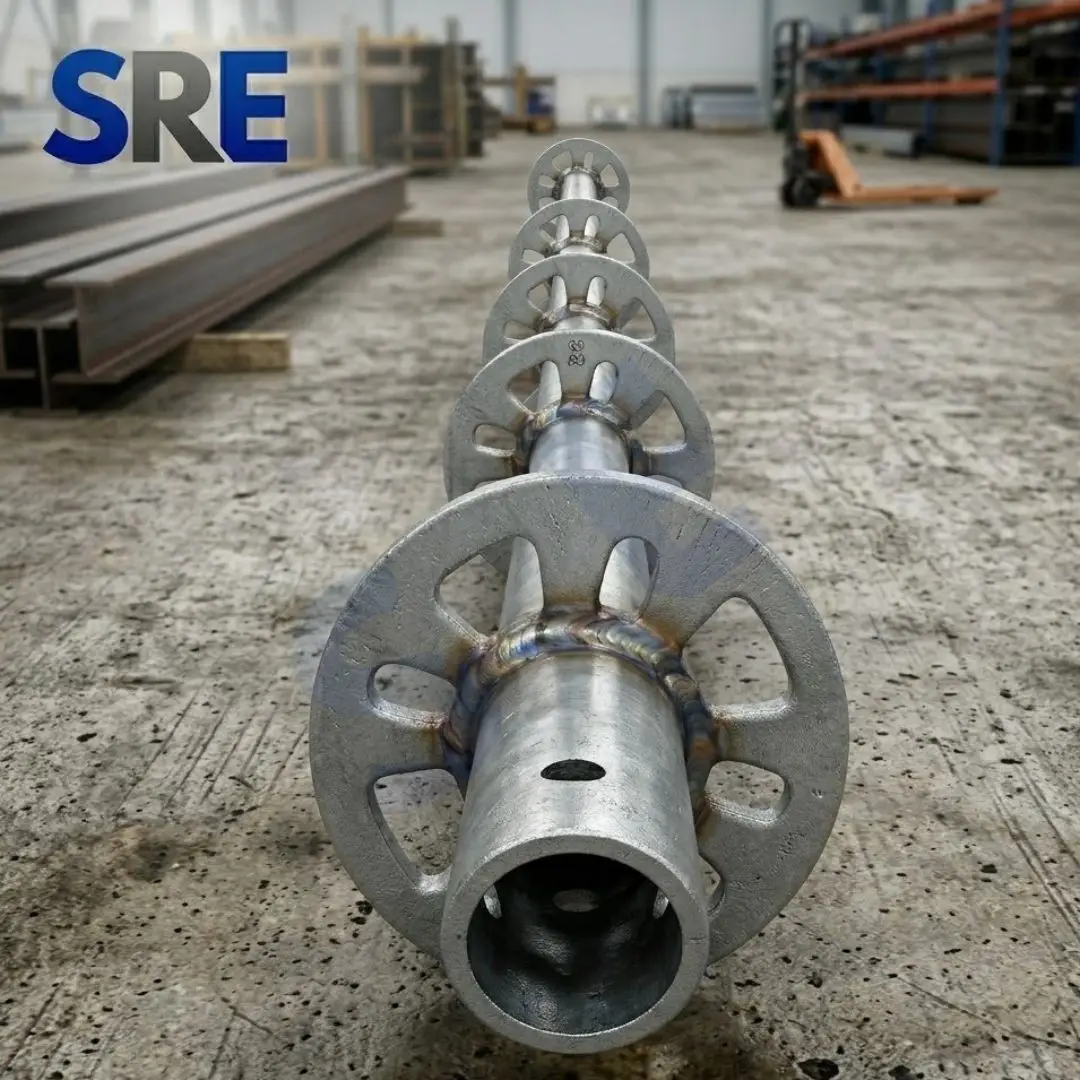
What is a Ringlock Vertical and What is Its Specialized Role?
A Ringlock Vertical is a high-tensile structural steel pipe engineered specifically for heavy-duty modular scaffolding systems. Unlike ordinary scaffolding pipes that feature loose, bolt-on couplers or static cups, the ringlock system is characterized by its signature eight-hole rosette rings factory-welded around the tube.
           [ INTERNAL JOINING SPIGOT ]
                       ||
         ==============||============== <--- Vertical Tube Top
         |             ||             |
         |         (ROSETTE)          | <--- 8-Hole Connection Ring
         |       o  o  o  o  o        |
         |                            |
         |                            |
         |      [RINGLOCK VERTICAL]   | <--- Main Load-Bearing Body
         |                            |
         |                            |
         |         (ROSETTE)          | <--- 500mm Interval Ring
         |       o  o  o  o  o        |
         |                            |
The fundamental architecture of this component serves several distinct engineering purposes:
1. Multi-Axis Connection Point (The Rosette)
The defining feature of the vertical standard is the rosette ring, which contains eight precisely stamped openings. Four small openings automatically lock the horizontal ledgers at perfect 90-degree right angles, while the four larger diagonal slots accommodate cross braces at variable angles. This eliminates manual measurement errors during assembly and allows a single standard to tie together up to eight independent structural members from a single plane.
2. Axial Gravity Load Transfer
Scaffolding towers fail when load-bearing tubes bend or bow outward under compression. The vertical standard is designed to maintain absolute perpendicular alignment. Because the horizontal ledgers and diagonal braces lock tightly into the solid rosette ring via heavy steel wedges, the dynamic loads are channeled along the absolute central axis of the pipe, drastically reducing the risk of structural buckling.
3. Inseparable Spigot Integration
To build high-altitude towers, vertical standards must be stacked on top of each other. Every high-performance vertical pipe features a heavy-duty, factory-fitted internal joining spigot at one end. This spigot slides smoothly into the base of the next standard, establishing a rigid, non-bending joint connection that maintains structural continuity over multiple stories.
Where Ordinary Scaffolding Fails: Why High-Stakes Sites Need Ringlock
Walk onto a basic residential housing site, and you will likely see traditional bamboo frames, local H-frames, or manual pipe-and-clamp structures. For minor, low-altitude plastering or painting work, these cheap alternatives can manage basic weights. However, they are highly inadequate for complex structural engineering projects. Try using an ordinary frame or a manual clamp system on a major bridge girder, a heavy chemical refinery refinery tower, or a deep slab concrete casting project, and you are inviting disaster.
Ordinary scaffolding systems fail under demanding industrial environments for several critical reasons: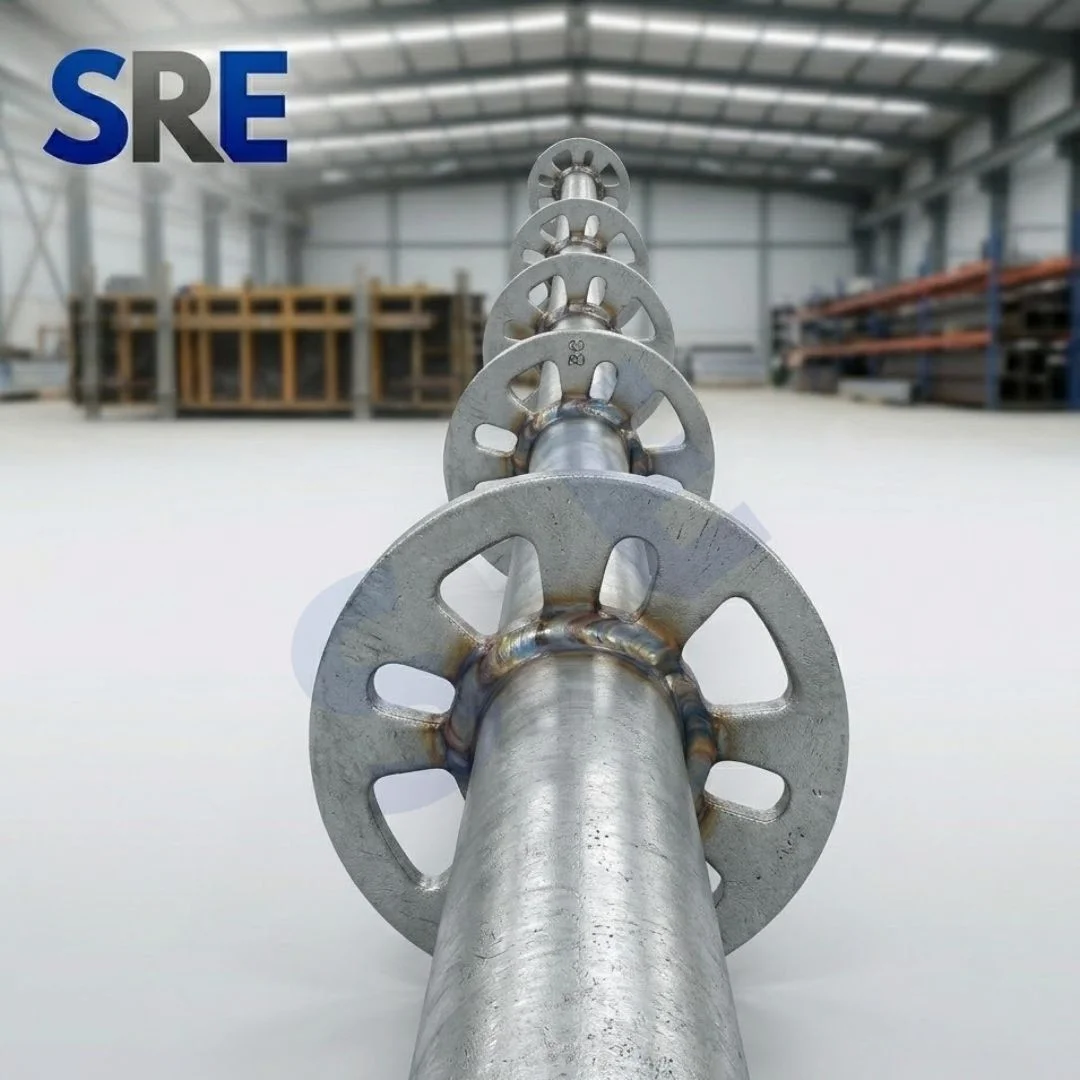
- Unpredictable Load Crushing: Manual scaffolding components are often made from uncertified, low-gauge steel pipes or scrap iron. When subjected to the immense downward crushing pressure of wet concrete casting, these sub-gauge pipes experience sudden structural bowing.
- Vibration Vulnerability: Modern infrastructure projects use high-frequency concrete vibrators and heavy moving equipment. Loose, manual pipe clamps rely entirely on friction; continuous site vibrations can cause the nuts to slip, destabilizing the entire platform.
- Time and Labor Inefficiencies: Traditional systems require skilled laborers to manually measure, align, and wrench every single right-angle joint. On massive infrastructure projects, this slow process destroys your execution timelines and inflates labor overheads.
This is precisely where the ringlock system becomes an absolute necessity. Because it utilizes a smart wedge-locking mechanism built directly into the factory-certified components, it eliminates the need for manual, loose fittings. A single worker with a standard hammer can lock horizontal beams and vertical rosettes together in a matter of seconds, creating a rigid, vibration-proof joint that cannot slip, slide, or back out. Whenever your project involves heavy vertical load distributions, high-altitude working platforms, or complex structural layouts, relying on anything less than a certified modular standard introduces unmanageable corporate and physical risks.
Critical On-Site Applications: Where Ringlock is Mandatory
There are specific industrial, commercial, and heavy engineering environments where using a certified modular ringlock system is not just an upgrade—it is strictly mandated by safety officers and structural compliance protocols:
1. Heavy Slab Shoring and Concrete Staging
During the construction of flyovers, metro rail girders, and massive commercial podium slabs, thousands of tons of wet liquid concrete are poured simultaneously. This creates an extreme, concentrated downward force. The vertical standards act as heavy-duty shoring pillars, effortlessly distributing the dynamic concrete load across a perfectly synchronized structural grid.
2. Industrial Plant Refineries and Power Stations
Refineries, chemical processing plants, and power stations feature complex networks of high-pressure pipelines, boilers, and spherical storage tanks. Traditional square-frame scaffolding cannot navigate these curved, tight spaces. Because the rosette ring allows for flexible diagonal bracing angles, the vertical standards can be erected around highly intricate industrial geometries with absolute ease.
3. Suspended and High-Altitude Cantilever Scaffolding
When working on high-rise facades, shipyards, or offshore oil rigs, building a scaffold platform from the ground up is often impossible. Contractors must deploy suspended or outward-projecting (cantilevered) platforms. The high-tensile locking mechanism of the ringlock system ensures that the horizontal cantilevers remain securely locked to the vertical spine, safely resisting strong wind shears and dynamic working loads at extreme heights.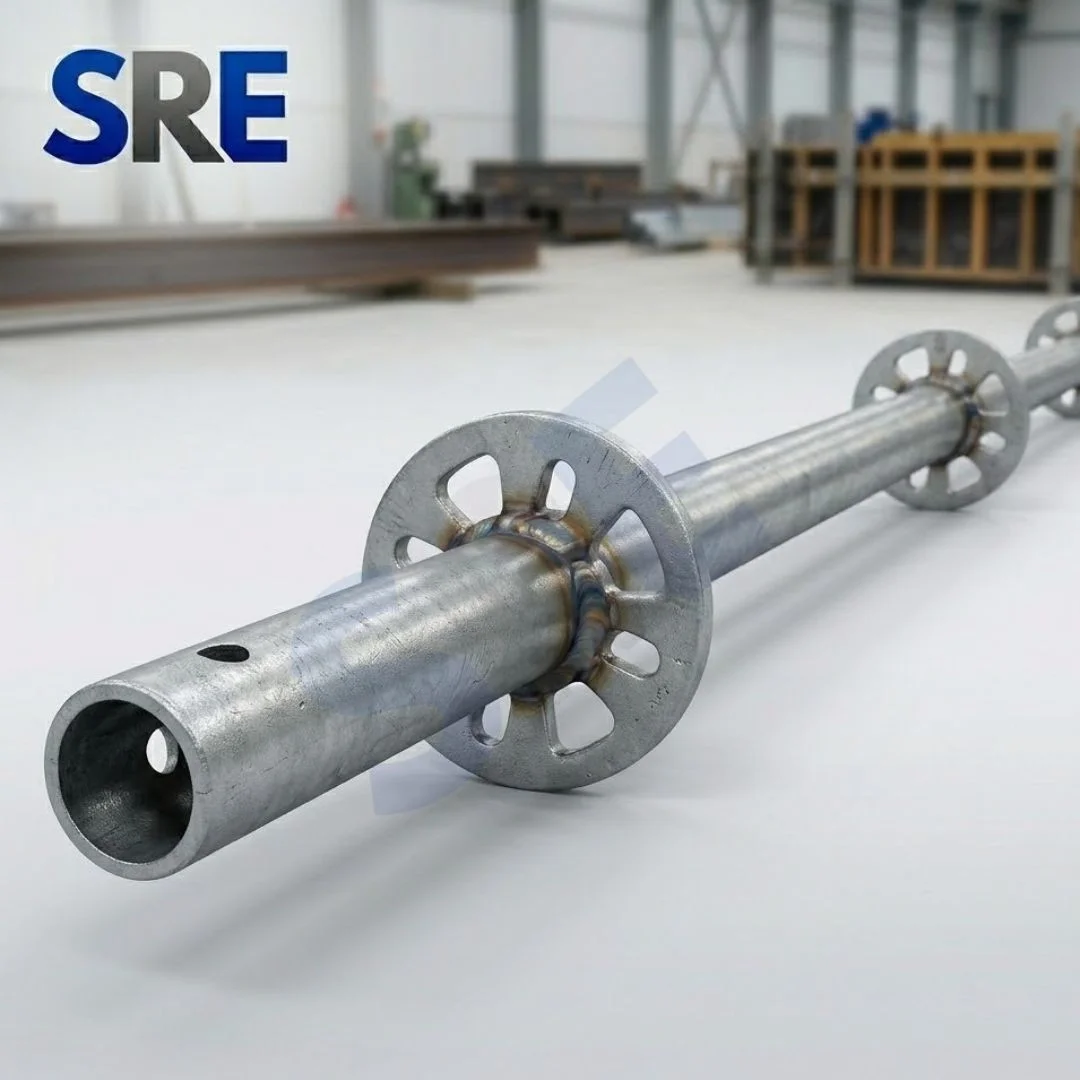
On-Site Safety Precautions: Preventing Catastrophic Failures
While the ringlock system is one of the most reliable and stable modular scaffolding systems available globally, on-site structural safety depends heavily on strict execution, proper installation protocols, and careful handling. Even the strongest vertical standards can be compromised if basic engineering principles are ignored during high-velocity site operations.
To ensure an accident-free work environment, your quality control and safety teams must enforce the following non-negotiable guidelines:
- Verify Absolute Plumb and Perpendicular Alignment: Vertical standards must be perfectly plumb during erection. A slight tilt or deviation from the 90-degree vertical axis introduces eccentric loading, which drastically cuts down the load-bearing capacity of the tube and can cause it to bow or buckle outward under full concrete weight.
- Drive Wedge Pins Home Completely: When connecting horizontal ledgers and diagonal braces to the rosette, the integrated wedge pins must be driven firmly into place with a hammer. A loose or halfway-inserted wedge pin fails to create the required high-compression friction lock, allowing the joint to rattle, warp, or disconnect under dynamic vibrations.
- Inspect the Internal Joining Spigots Regularly: Before stacking vertical standards to increase tower height, ensure the internal joining spigot and its locking pin holes are completely free of concrete slurry, deep rust, or physical dents. If a spigot does not seat fully inside the upper pipe, it creates a weak, unstable hinge point right in the middle of your vertical column.
- Enforce Strict Load Calculations and Weight Limits: Never exceed the maximum certified load capacity of your vertical columns. Ensure that heavy materials, masonry blocks, and industrial tools are distributed evenly across the working platforms rather than being stacked in a single corner, which creates highly dangerous localized stress zones.
- Check for Hidden Structural Damage After Dismantling: Scaffolding components are frequently dropped or mishandled during teardowns. Before storing or re-erecting a vertical standard, check for subtle pipe bends, hairline cracks along the rosette factory welds, or ovaling of the tube ends. Any deformed component must be pulled from rotation immediately.
Manufacturing Excellence: How Shri Radha Enterprises Builds the Best Standards
At Shri Radha Enterprises, we don't treat structural vertical standards as basic commodities. We understand that the safety of your multi-story construction grids, the physical well-being of your crews, and your corporate compliance records rest entirely on the material integrity of our hardware.
To deliver zero-compromise safety and maximum load-bearing efficiency, our advanced manufacturing facility operates under world-class precision engineering protocols:
1. High-Tensile Structural Carbon Steel
We strictly utilize premium, mill-certified structural steel pipes featuring uniform wall thickness and optimal chemical composition. This guarantees excellent yield strength, ensuring our vertical pillars handle thousands of kilograms of direct downward pressure without structural fatigue, bowing, or deformation.
2. 360-Degree Automated Rosette Welding
The rosette ring is the absolute heart of the ringlock system. We eliminate human error and irregular weld beads by employing high-capacity, automated factory welding lines. Every single rosette undergoes continuous, deep-penetration 360-degree molecular fusion to the pipe body, ensuring our connection rings can comfortably withstand massive multi-axis tearing and shear forces.
3. Precision Shell-Molding and Component Tolerances
To eliminate "scaffold play" and shaking platforms, the internal receiving slots, joining spigots, and rosette alignments are manufactured with sub-millimeter tolerances. This precision design ensures that every piece fits smoothly, locking together in a fraction of a second to build an absolutely rigid, zero-wobble structural matrix.
4. Thick Industrial-Grade Zinc Galvanization
Every single vertical standard undergoes an intensive chemical cleaning and hot-dip or electro-galvanization process. This thick zinc protective barrier safeguards the hardware against extreme weather conditions, heavy monsoons, and messy concrete casting environments, preventing deep rust and ensuring smooth mechanical performance for years to come.
Direct Factory Pricing: Maximum Value, No Middlemen
In addition to superior structural safety, sourcing your inventory from Shri Radha Enterprises provides a significant commercial advantage. Because we operate as a direct, full-scale manufacturer rather than a local trader or intermediary broker, we eliminate all third-party markups and hidden commissions.
We deliver your high-volume, project-ready assets directly from our production floor to your project site at highly competitive, transparent factory-direct wholesale pricing. This direct-to-site supply chain enables your business to secure top-tier, certified modular assets while maximizing your capital efficiency and delivering a superior return on investment (ROI) project after project.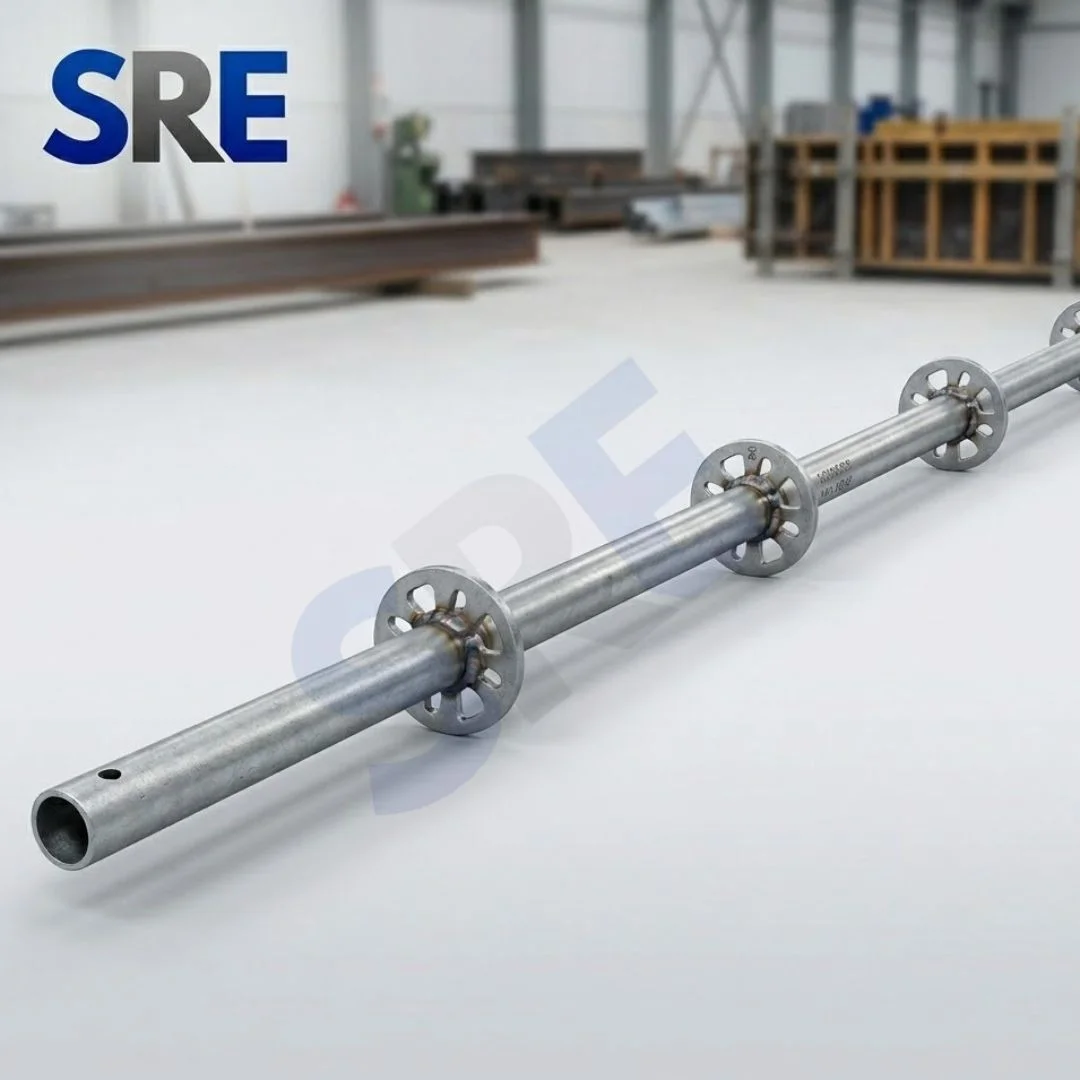
Frequently Asked Questions (FAQ)
Q1: Kya Ringlock vertical standards ko aam residential ya choti sites pe use kiya ja sakta hai?
Haan bhai, bilkul kiya ja sakta hai, lekin yeh system aam taur par wahan use nahi hota kyunki iska main engineering purpose heavy load-bearing aur extreme high-altitude safety hai. Choti ya low-altitude sites pe log saste local H-frames ya normal pipe-and-clamp chalate hain. Lekin jahan structural loads zyada ho, flyovers ban rahe hon, ya commercial high-rises hon, wahan safety aur speed ke liye ringlock ka hona mandatory ho jata hai.
Q2: Vertical standard me standard 500mm spacing ka kya fayda hota hai?
Rosette rings ko factory me strictly 500mm ke intervals par weld kiya jata hai. Iska bada fayda yeh hai ki poori site pe scaffolding grid ki height aur alignment perfect 90-degree right angle par rehti hai. Laborers ko bar-bar tape se measuring karne ki zaroorat nahi padti, jisse human error khatam ho jata hai aur scaffolding ke tera-medha (warped) hone ka khatra bilkul zero ho jata hai.
Q3: Agar wedge pin poora tight na ho, toh kya hadsa ho sakta hai?
Yeh bohot badi galti hoti hai. Agar labor wedge pin ko hammer se poora andar tak drive nahi karegi, toh joints me vibration-proof friction lock nahi banega. Concrete pouring ke waqt jab high-frequency vibrators chalte hain, toh loose pins hil kar bahar nikal sakti hain. Isse horizontal beam vertical standard se alag ho jayega aur poora platform lateral collapse (ek side girna) ka shikar ho sakta hai.
Q4: Shri Radha Enterprises apne vertical standards ki welding ko safe kaise banati hai?
Shri Radha Enterprises me hum kisi bhi tarah ki manual irregular welding ko allow nahi karte. Rosette rings ko pipe body ke sath connect karne ke liye 360-degree automated factory welding lines ka use kiya jata hai. Yeh deep-penetration molecular fusion ensure karti hai, jisse dynamic loads aur twisting forces ke dauran welding point se rosette ke tootne ya alag hone ka sawal hi nahi uthta.
Q5: Factory price par procurement karne ka kya commercial advantage hai?
Jab aap Shri Radha Enterprises se direct procurement karte hain, toh aap seedhe manufacturer se deal kar rahe hote hain. Isme koi middleman, local trader, ya broker ka hidden commission nahi hota. Is wajah se aapko bulk inventory bilkul genuine factory-direct wholesale pricing par milti hai, jisse aapka project budget control me rehta hai aur behtar ROI milta hai.
Shri Radha Enterprises Team
We specialize in nylon rollers, sliding gate wheels, gate hardware, scaffolding items, cuplock systems, and accessories.