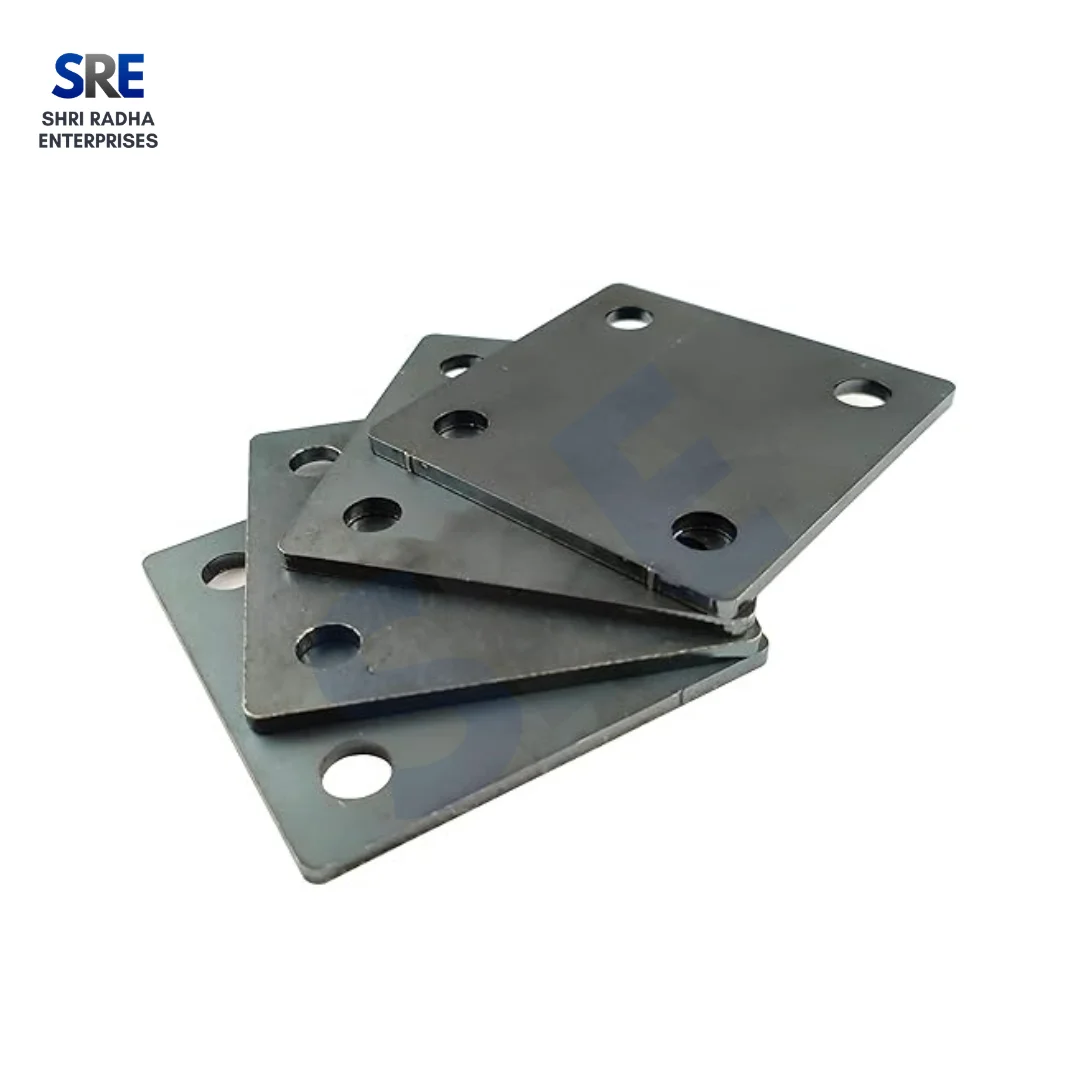
Scaffolding Base Plate Safety: The Invisible 1-Degree Flaw That Flips a 40-Foot Structure Into a Death Trap
Featured Products
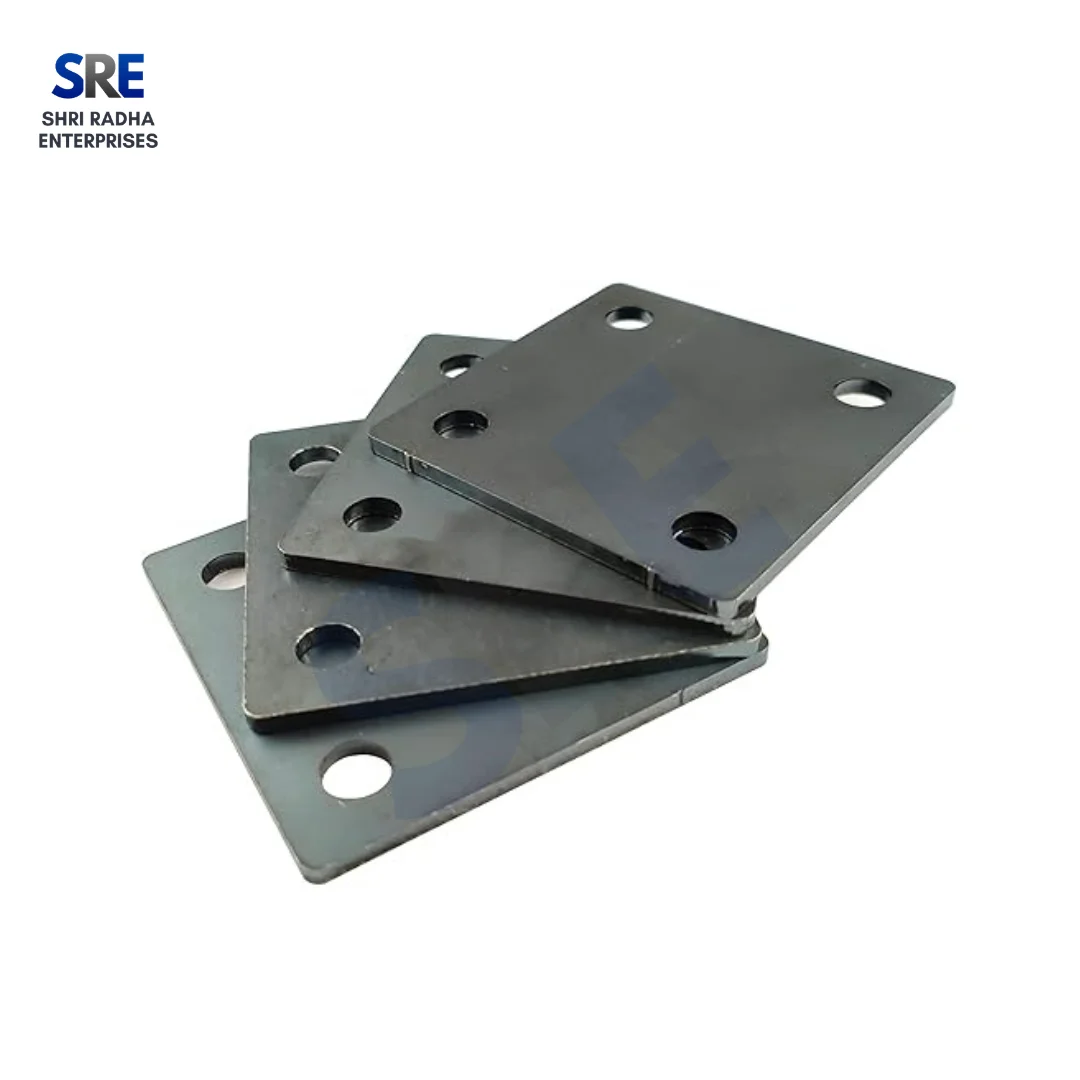
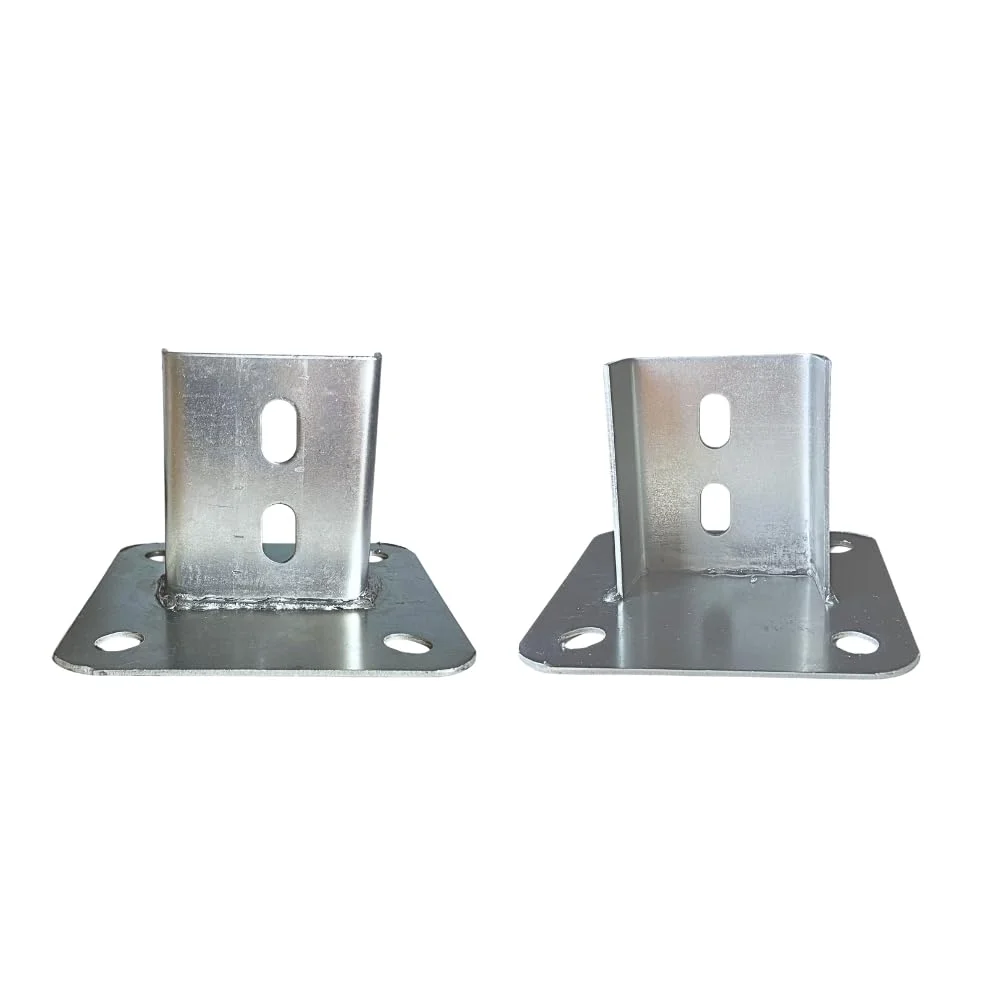
Scaffolding Base Plate Safety: The Invisible 1-Degree Flaw That Flips a 40-Foot Structure Into a Death Trap
Last month, I was standing on a high-stakes commercial site in Punjab when a seasoned structural engineer pointed directly at the mud-slicked ground and told me something that completely reframed how I look at industrial safety. He looked up at a massive, towering 40-foot grid and said, "Everyone looks up to check the pipes, but the angel of death sits down here." He was pointing at a single, slightly warped scaffolding base plate. To the untrained eye, a minor 1-degree bend or a cheap 4mm thickness deficit at the ground level looks completely harmless—just an ordinary piece of steel doing its job. But under the unforgiving laws of physics, a tiny 1-degree structural flaw at the baseline acts like a microscopic crack in a dam. As that scaffolding matrix climbs skyward, that minor ground-level deviation multiplies exponentially with every single vertical feet. By the time your crew is working at a dizzying height, that invisible foundation flaw converts a heavy-duty platform into a swaying, unstable nightmare—quietly triggering a catastrophic high-altitude domino effect that no safety harness in the world can stop.
The Physics of Foundation: Why a Microscopic Bend Multiplies at 40 Feet
Let’s look at the raw structural physics that most local traders completely ignore. When you place a scaffolding base plate on the ground, it is designed to take thousands of kilograms of vertical down-force and distribute it evenly across a flat surface.
But what happens when a supplier delivers a sub-standard, thin, or slightly warped plate?
[40 Ft Elevation]  ---------------------> (Sway Multiplies: 10 to 12 Inches)
                                        /
                                       /
                                      /
                                     /   <--- Vertical Standards Lean
                                    /
                                   /
[Ground Baseline]  _______/______/ (1-Degree Foundation Tilt)
When a foundation plate has even a tiny, invisible 1-degree tilt or structural warp, that minor angle doesn't stay small. For every single foot your scaffolding climbs vertically, that angular deviation stretches outward. By the time your structural grid reaches a soaring 40 feet high, that microscopic ground-level bend forces the top vertical standards to lean out of alignment by nearly a foot.
Once your vertical load-bearing pipes lose their perfect 90-degree alignment with the earth, the physics of weight distribution completely shatters. Instead of pushing straight down into the solid ground, the immense weight of concrete, heavy tools, and labor crews starts pulling sideways. This creates an incredibly violent lateral strain on the joint couplers and ledgers above, pushing the entire high-stakes platform to its absolute breaking point.
==========================================================================================
                     HIGH-ALTITUDE SCAFFOLDING DOMINO EFFECT DIAGRAM
==========================================================================================

   [ 40 FEET HEIGHT ]        |====================================|  <-- DANGEROUS SWAY!
                             |  [WORKING PLATFORM / CREW AREA]     |  (Nearly 10-12 Inches
                             |====================================|   Out of Alignment)
                                    /                      /
                                   /                      /
                                  /                      /  <-- Lateral Strain on
                                 /                      /       Joints & Couplers
                                /                      /
    [ 20 FEET HEIGHT ]         /                      /
                              /                      /
                             /                      /  <-- Vertical Standards
                            /                      /       Leaning Out Extensively
                           /                      /
                          /                      /
                         /                      /
                        /                      /
    [ GROUND BASELINE ] /                      /
                       /                      /
                      /______________________/
                      [ ]                  [ ]  <-- Uncertified, Warped Plate
                       \                    /
                        \__ [1° GROUND TILT] __/  <-- INVISIBLE 1-DEGREE FLAW!
The Invisible Threat: How Substandard Manufacturing Feeds the Flaw
Bhai, now let’s call out the real culprit behind this dangerous shift in physics. A 1-degree ground tilt rarely happens because your site supervisors are careless; it happens because your procurement department fell into the "low-cost supplier trap."
When local vendors cut corners to win a contract on price, they actively compromise on two critical engineering metrics:
1. The Carbon Steel Deficit (Material Fatigue)
A certified B2B scaffolding base plate must be stamped from heavy-duty structural steel (like IS 2062 grade) to withstand massive compression loads. When suppliers use uncertified, low-grade scrap steel, the molecular structure lacks elasticity. Under the sheer weight of concrete slabs and heavy machinery, a cheap 4mm plate will experience micro-yield fatigue. It doesn't snap immediately; instead, it slowly bows down in the center under heavy loads, quietly introducing that fatal 1-degree shift right in the middle of a major pour.
2. High-Stress Welded Joints (The Spigot Snapping Point)
The central spigot tube—the solid metal pin that inserts directly into your vertical standard pipes—is your structure’s primary horizontal stabilizer. Standard local traders use manual, low-penetration welding that merely coats the surface. When the top of a 40-foot scaffold begins to sway due to wind or uneven worker movement, a massive dynamic leverage force travels down the pipe, concentrated entirely on the base of that spigot. If the weld isn't a deep, precision-fused MIG weld, the spigot will shearing-snap right at the baseline, completely releasing the vertical pipe to kick out sideways.
  [CRITICAL FAILURE POINT]
          ||  ||
          ||  ||  <-- Vertical Standard Pipe
      ____||__||____
     [__  WELDFILE  __] <-- Brittle, Low-Penetration Surface Weld
  ======|========|======
        | Spigot |     <-- Dynamic Sideways Leverage Snaps Spigot Here!
  ----------------------
     BASE PLATE BODY
Bhai, when a site suffers a catastrophic failure, the investigation committee doesn't look at the sky; they measure the steel thickness and check the weld integrity at the dirt level.
The 30-Second On-Site Audit: How to Spot a Defective Base Plate Before it Leaves the Truck
Bhai, you don't need a complex testing lab to protect your site, your workers, and your corporate reputation. When a delivery truck arrives at your site, your project supervisors can run a high-impact, 30-second structural audit using nothing but a standard digital vernier caliper and a flat surface.
Before you sign the delivery challan, check these three non-negotiable quality metrics right at the truck bed:
1. The True-Thickness Check (The Caliper Test)
Many local traders quote a standard 6mm or 5mm thickness but quietly deliver plates that measure 0.8mm to 1mm less to save on raw material costs.
- The Test: Take a digital vernier caliper and measure the plate directly at all four corners—not just the edges.
- The Standard: For heavy-duty infrastructure projects, a certified scaffolding base plate must maintain its specified thickness across the entire body. If your caliper reads a deficit greater than $0.2\text{mm}$, that batch is highly prone to micro-yield bowing under concrete load pressures and should be rejected instantly.
2. The Flatness Balance Test (Hunting the 1-Degree Deficit)
As we established, a minor, invisible 1-degree warp at the baseline turns into a massive structural sway at 40 feet high.
- The Test: Place five random sample plates face-down on a perfectly flat, level surface (like a finished concrete slab or a steel workbench). Try to rock the plate by pressing down firmly on opposite diagonal corners.
- The Standard: If the plate wobbles or daylight is clearly visible underneath the center, the plate is warped. A high-quality base plate must lay perfectly flush with zero rocking room.
3. The Weld Penetration Audit (The Spigot Junction)
A weak, superficial weld around the central spigot pin will snap clean when exposed to heavy lateral wind loads at high altitudes.
- The Test: Visually inspect the circular joint where the spigot pin meets the flat plate. Look for a smooth, uniform, thick bead of metal with zero surface porosity (tiny pinholes) or slag inclusions.
- The Standard: Demand factory-certified MIG (Metal Inert Gas) welding rather than cheap manual arc welding. A precision MIG weld ensures deep fusion between the spigot tube and the plate body, creating a single, indestructible piece of structural hardware.
  [INSPECTION CHECKSHEET FOR SITE SUPERVISORS]
  +-------------------------+-------------------------+-------------------------+
  |      CRITICAL TEST      |    ACCEPTABLE RANGE     |     REJECTION TRIGGER   |
  +-------------------------+-------------------------+-------------------------+
  | Corner Thickness        | Full 5.0mm / 6.0mm      | Deficit > 0.2mm         |
  | Surface Flatness        | 100% Flush (No Wobble)  | Any Diagonal Rocking    |
  | Spigot Weld Profile     | Uniform MIG Bead        | Pinholes or Arc Splays  |
  +-------------------------+-------------------------+-------------------------+
Bhai, by enforcing this quick 30-second check, you instantly signal to suppliers that your site runs on absolute engineering precision, completely eliminating the risk of a ground-level failure.
The Zero-Compromise Foundation: Why Structural Integrity Starts at the Factory Floor
Bhai, at the end of the day, a site supervisor can run audits all day long, but true on-site safety shouldn't rely on catching errors—it should rely on factory-floor precision. When you are erecting a heavy-duty grid that climbs multiple stories high, you are not just buying pieces of stamped steel; you are investing in an insurance policy for your workforce, your project timeline, and your corporate reputation.
At Shri Radha Enterprises, we treat the baseline with the absolute engineering respect it demands. We understand that a microscopic variance at ground level dictates structural behavior at 40 feet high. That is why every single scaffolding base plate that leaves our facility is built under strict quality controls:
- Certified Raw Materials: We source high-grade structural steel that guarantees consistent density and structural elasticity, completely eliminating the risk of micro-yield bending under heavy concrete pours.
- Precision Surface Leveling: Our automated stamping processes ensure that every plate rests 100% flush against the ground, completely erasing that catastrophic 1-degree foundation tilt.
- Deep-Fusion MIG Welding: Every stabilizing spigot tube undergoes continuous-bead MIG welding to provide deep joint fusion, ensuring maximum resistance against harsh lateral wind loads and high-altitude swaying forces.
  [THE SHRI RADHA ENTERPRISES ASSURANCE]
  +-----------------------------------------------------------------+
  |  100% Inspected Baseline Flatness   |  No Foundation Wobble     |
  +-------------------------------------+---------------------------+
  |  Deep-Fusion Automated MIG Welds    |  Zero Spigot Shearing     |
  +-------------------------------------+---------------------------+
  |  True-Gauge Mill Certified Steel    |  No Dimensional Shaving   |
  +-----------------------------------------------------------------+
Don't let a minor, uncertified ground-level component become the single point of failure for your entire multi-million rupee project. Build on a foundation that stands solid under pressure, from the absolute first millimeter to the very top vertical tier.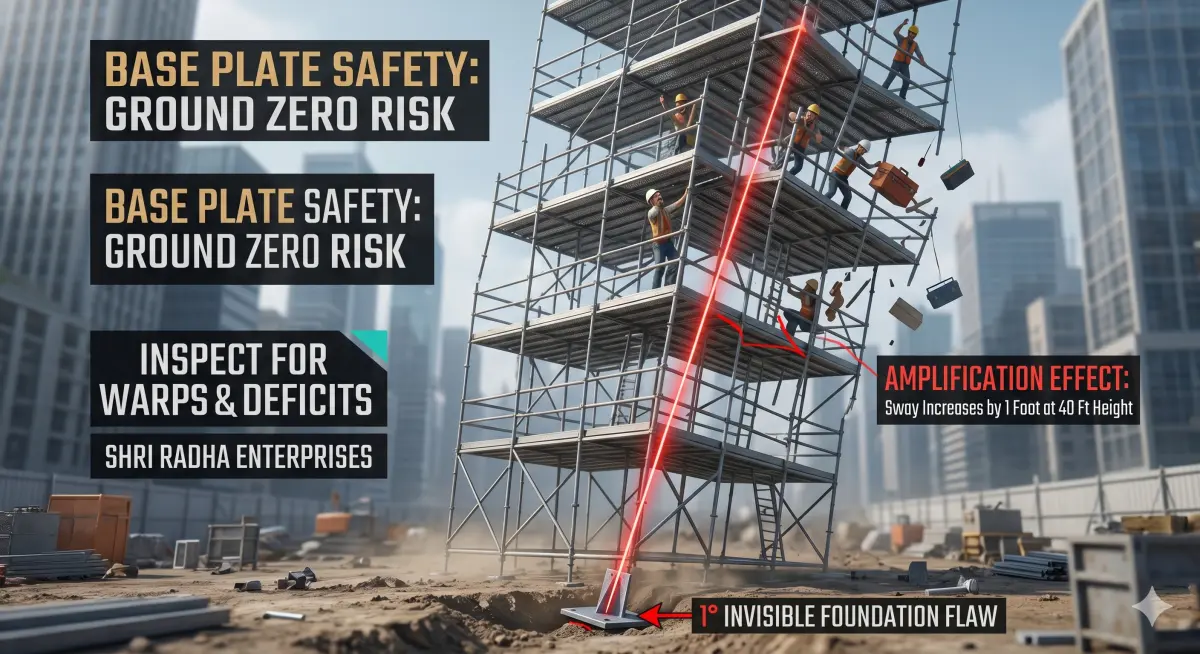
Shri Radha Enterprises Team
We specialize in nylon rollers, sliding gate wheels, gate hardware, scaffolding items, cuplock systems, and accessories.