Screw Jack Types Explained: Which Base Leveler Does Your Site Need?
Featured Products
Screw Jack Types Explained: Which Base Leveler Does Your Site Need?
The screw jack is arguably the most critical component on any scaffolding site, serving as the literal anchor between the earth and your entire structure. However, one of the biggest mistakes site managers, procurement officers, and contractors make is assuming that all base levelers are created equal. The reality is that a massive concrete high-rise demands an entirely different foundation strategy than a heavily sloped commercial ramp or a standard residential perimeter.
Trying to force a one-size-fits-all solution onto complex terrain does not just slow down your erection time—it introduces catastrophic structural risk. When a scaffold collapses, the failure often originates at the foundation level due to improper load distribution, ground settlement, or the use of inadequate leveling hardware.
In this comprehensive, deep-dive guide, we are going to break down the exact types of screw jacks available on the market today. From heavy-duty solid shafts engineered for massive dead weights to terrain-adapting swivel bases and formwork-specific units, this guide will ensure you can confidently select the perfect hardware for your specific site requirements.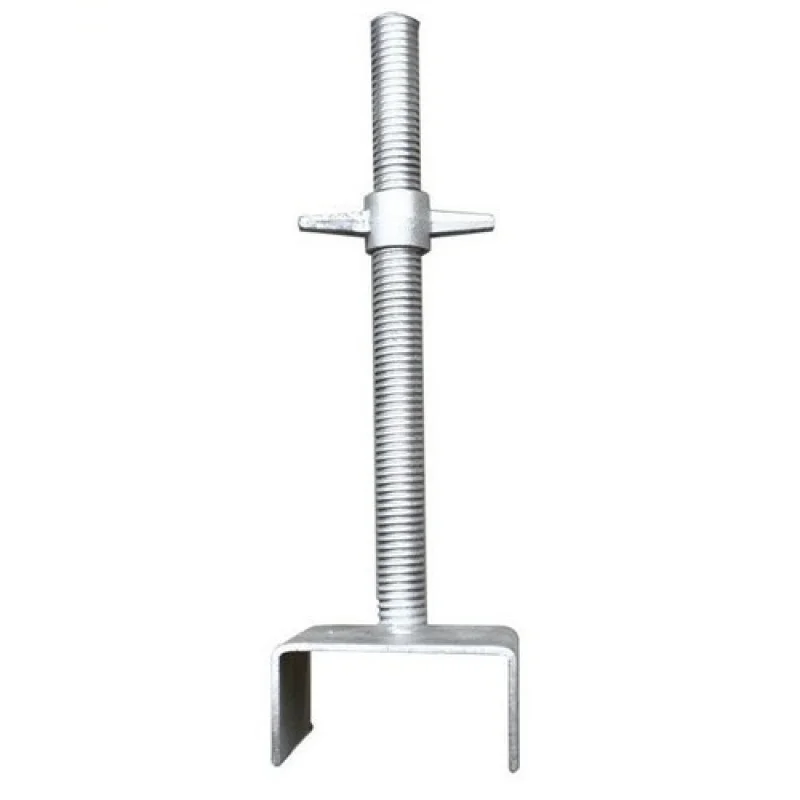
The Engineering Behind a Premium Screw Jack
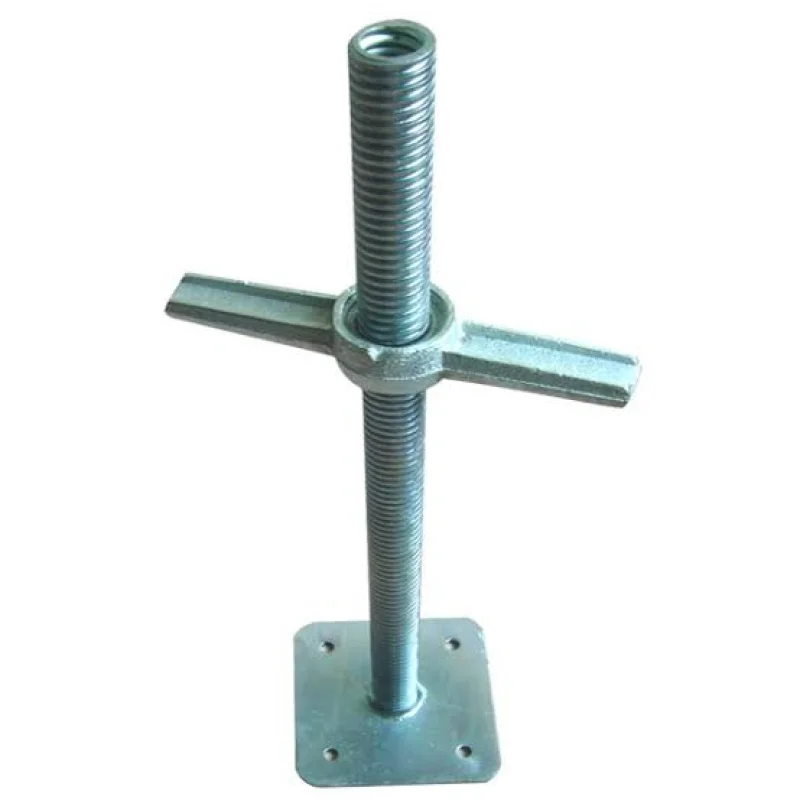
Before diving into the specific variations, it is crucial to understand what makes a high-quality screw jack function effectively. A standard screw jack consists of three primary components: the base plate, the threaded stem, and the adjusting nut.
- The Base Plate: This is the flat (or articulating) metal plate that makes direct contact with the ground or soleboard. It must be wide enough to distribute the immense vertical load of the scaffolding across a larger surface area, preventing the scaffold from sinking into soil or cracking concrete.
- The Threaded Stem: The vertical shaft that slides into the bottom of your scaffold tube. The threads are typically "Acme threads"—a specific trapezoidal thread profile designed for heavy load-bearing and smooth movement, unlike the V-shaped threads found on standard household screws.
- The Adjusting Nut (Collar): This component is threaded onto the stem. The vertical scaffolding tube sits directly on this nut. By turning the nut up or down the threaded stem, you raise or lower the scaffolding tube, allowing for precise millimeter-by-millimeter leveling. Premium screw jacks feature drop-forged nuts, meaning the metal was pounded into shape under extreme heat, aligning the grain of the steel for maximum shear strength.
Understanding these mechanics makes it clear why choosing the correct variation of screw jack is non-negotiable for site safety.
1. The Solid MS Screw Jack: The Heavy-Duty Champion
When your project involves massive load-bearing requirements, such as commercial high-rises, heavy masonry work, industrial plant shutdowns, or bridge construction, the solid mild steel (MS) screw jack is the absolute gold standard in the scaffolding industry.
Engineering and Application
As the name implies, a solid screw jack is machined from a single, solid rod of mild steel. There is no hollow cavity inside the shaft. This dense, solid construction provides absolute maximum shear strength and offers virtually zero compression risk under extreme dead weights and dynamic loads.
In heavy commercial construction, the upper decks of a scaffold are subjected to immense pressure. Bricklayers stack heavy pallets of block and mortar, workers move dynamically across the platforms, and high winds add lateral force. All of these forces travel straight down the vertical tubes directly into the screw jack. A solid stem ensures that regardless of the aggressive loads applied, the foundation will not buckle, bend, or warp.
Why Choose It?
If your scaffold is going to support heavy materials, or if the structure will be built to significant heights, you cannot compromise. The solid screw jack, especially when paired with deep-cut Acme threads and a heavy drop-forged adjusting nut, guarantees unyielding structural integrity. While they are heavier to transport and handle than their hollow counterparts, the safety margin they provide on commercial sites is unparalleled.
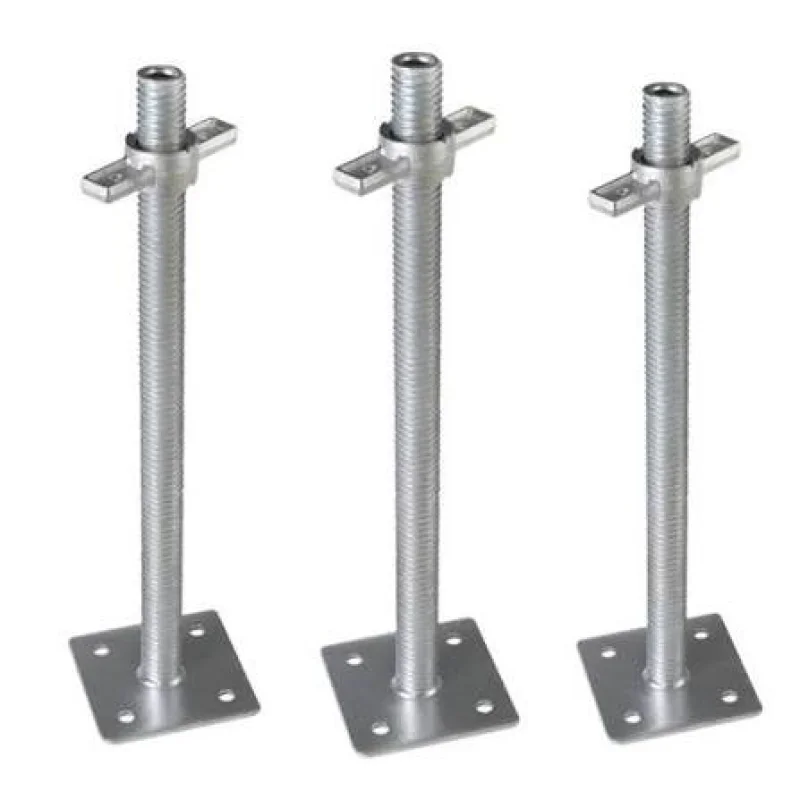
2. The Hollow Tube Screw Jack: Lightweight and Efficient
For standard residential projects, light commercial painting, stucco application, or basic building maintenance access, a hollow tube screw jack offers a highly efficient, labor-friendly, and cost-effective solution.
Engineering and Application
Instead of a solid rod of steel, this screw jack is manufactured using thick, heavy-gauge steel tubing. Threads are rolled or machined into the exterior of the hollow tube. This design drastically reduces the overall weight of the component without entirely sacrificing its vertical load-bearing capabilities.
Because scaffolding erection is an incredibly labor-intensive process, minimizing the physical strain on your crew translates directly to faster build times. A hollow screw jack is significantly easier for scaffolders to carry, maneuver, and install on-site.
Why Choose It?
It is vital to understand that "hollow" does not mean "weak." A high-quality hollow screw jack still provides excellent stability and load distribution for lighter load classifications. However, it lacks the extreme crush resistance of a solid shaft. If your project is restricted to light-duty work—where the scaffold is primarily supporting the weight of the workers and a few light tools—the hollow screw jack is the most practical and economical choice for your inventory.
3. The Swivel Base Screw Jack: The Uneven Terrain Specialist
Construction sites are rarely perfectly flat. When you are erecting scaffolding on sloped concrete, pedestrian ramps, steep hillsides, or drastically uneven ground, utilizing a standard flat-plate base is a major safety violation. This is where the swivel base screw jack becomes mandatory.
Engineering and Application
If you place a standard rigid screw jack on a slope, only a fraction of the base plate touches the ground. This point-loading creates a massive risk of slipping and severely limits the hardware's load capacity.
The swivel base screw jack is engineered specifically for these challenging environments. It features a heavy-duty pivoted base plate connected to the bottom of the threaded stem via a ball-and-socket or heavy hinged joint. This articulation allows the base plate to tilt and adapt to the exact angle of the ground—often up to 45 degrees—while keeping the vertical threaded stem perfectly upright and plumb.
Why Choose It?
By ensuring 100% surface contact between the metal base plate and the sloped ground, the swivel screw jack distributes the load safely and securely across the angled terrain. This eliminates the dangerous temptation for crews to use improper shims (like loose bricks or scrap wood) to level a flat jack on a hill. For civil engineering projects, retaining walls, or urban environments with graded concrete, the swivel screw jack is an absolute necessity.
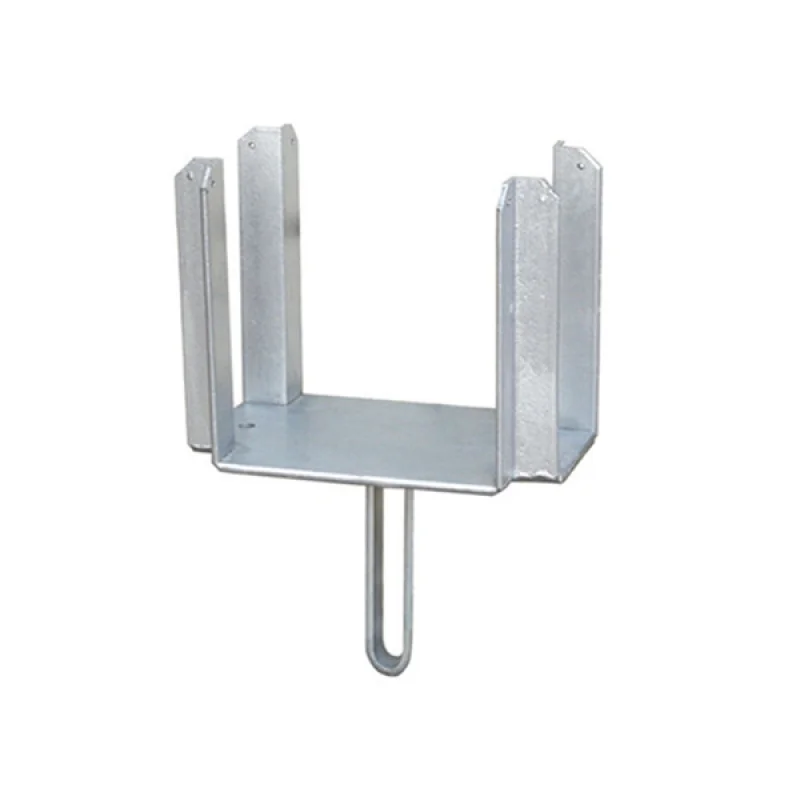
4. The U-Head Screw Jack: The Formwork Anchor
While standard scaffolding is used for human access, scaffolding systems are also heavily utilized for concrete formwork, falsework, and structural shoring. When you are supporting heavy horizontal timber beams or steel channels to pour a concrete slab, a standard flat base leveler simply will not keep your materials secure at the top of the structure.
Engineering and Application
The U-head screw jack (sometimes called a Stirrup Head) is placed at the top of the vertical scaffold tubes rather than the bottom. It replaces the traditional flat bottom plate with a strong, U-shaped steel channel welded to the end of the threaded stem.
This specialized screw jack is designed to cradle wooden bearers, steel beams, or H20 timbers securely in place. As the adjusting nut is turned, the U-head moves up or down, allowing for precise millimeter-leveling of the horizontal beams before the plywood formwork is laid down.
Why Choose It?
When pouring hundreds of tons of wet concrete, any horizontal slippage in the shoring structure will lead to a blowout or collapse. The thick steel walls of the U-head screw jack bracket physically lock the horizontal beams in place, completely eliminating the dangerous risk of horizontal slippage during high-stakes concrete pours.
5. The Caster Wheel Screw Jack: The Mobile Scaffolding Solution
When your crew requires a temporary, mobile access tower that can be frequently repositioned around a large site—such as for overhead mechanical, electrical, and plumbing (MEP) installations, drywall taping, or warehouse maintenance—a static foundation will only slow you down. Dismantling and rebuilding a scaffold every time you need to move ten feet is highly inefficient.
Engineering and Application
The caster wheel screw jack solves this problem by integrating a heavy-duty polyurethane or solid rubber wheel directly into the base of the threaded stem. This transforms a static scaffold into a mobile rolling tower.
These specialized units feature dual-action locking mechanisms. Once the scaffold is rolled into the desired position, the worker engages the heavy-duty brake, which locks both the wheel's rolling rotation and the caster's swiveling motion. Once locked, the worker uses the threaded nut on the screw jack stem to perfectly level the tower on the floor before climbing.
Why Choose It?
It delivers the ultimate combination of site mobility and secure, adjustable leveling. However, it is crucial to note that caster wheel screw jacks are strictly for light-duty, mobile access towers. They should never be used to support heavy masonry or continuous multi-story facade scaffolding.
Crucial Safety Guidelines for Scaffolding Screw Jacks
Even the highest quality screw jack can fail if it is utilized improperly. Always adhere to the following safety protocols on your job site:
- The "Two-Thirds" Extension Rule: A screw jack must never be fully extended. Industry safety standards universally dictate that at least one-third to one-quarter of the threaded stem must remain inside the scaffold tube at all times. Overextending the screw jack drastically reduces its structural integrity and creates a severe bending (buckling) hazard.
- Use Soleboards on Soft Ground: If you are erecting scaffolding on soil, grass, asphalt, or gravel, a screw jack alone is not enough. You must place a wooden soleboard (a thick timber plank) beneath the metal base plate of the screw jack to further distribute the load and prevent the metal plate from sinking into the earth after heavy rain.
- Visual Inspections: Before every single assembly, crews must inspect the screw jacks. Look for rust that compromises the metal, ensure the adjusting nut turns smoothly by hand without seizing, and immediately discard any screw jack with a visibly bent stem or cracked welding at the base plate.
Frequently Asked Questions (FAQs) About Scaffolding Screw Jacks
1. What is a scaffolding screw jack? A scaffolding screw jack is an adjustable base foundation used to level and stabilize a scaffolding tower. Placed at the bottom of the vertical scaffold tubes, it uses a threaded stem and an adjusting nut to ensure the structure remains perfectly plumb, even on uneven ground.
2. What is the difference between a solid and hollow screw jack? A solid screw jack is machined from a single, solid piece of mild steel (MS), offering maximum load-bearing capacity and crush resistance for heavy commercial construction. A hollow tube screw jack is made from thick steel piping, making it lighter, highly efficient, and ideal for standard residential or light-duty loads.
3. Can I use a standard flat screw jack on sloped ground? No. Using a flat plate screw jack on a slope drastically reduces surface contact and creates a severe safety hazard. For uneven or sloped terrain, you must use a swivel base screw jack, which features a pivoting plate that automatically adjusts to match the exact angle of the ground safely.
4. What exactly is a U-head screw jack used for? A U-head screw jack features a U-shaped top bracket instead of a flat bottom plate and is used at the top of a scaffold structure. It is specifically designed to cradle and secure horizontal timber beams, H20 beams, or steel channels used heavily in concrete formwork, shoring, and overhead load support.
5. How far can I safely extend a scaffolding screw jack? Industry safety standards generally dictate that a screw jack should never be extended beyond two-thirds (2/3) to three-quarters (3/4) of its total threaded length. Overextending the stem of the screw jack significantly reduces its structural strength and increases the risk of the shaft buckling.
6. Why do premium screw jacks use Acme threads? Acme threads are deeper, wider, and flatter than standard V-shaped threads. This specialized engineering design gives the screw jack superior load-carrying capacity, allows for smoother vertical adjustments even under pressure, and prevents the nut from stripping or jamming under massive construction loads.
7. How much weight can a heavy-duty screw jack hold? While exact load capacities depend on the manufacturer's specific engineering, testing, and tube diameter, a premium solid MS screw jack is engineered to safely support several tons of dead and dynamic weight per leg. Always check the load-testing certifications provided by your screw jack supplier.
8. Are caster wheel screw jacks safe for heavy construction? A caster wheel screw jack is specifically designed for mobile access towers, indoor painting, and light maintenance work. While they feature heavy-duty locking brakes for leveling, they are absolutely not intended to support the extreme weights of masonry, bricklaying, or heavy commercial decking.
9. What is the best material for a durable scaffolding screw jack? The most reliable and durable material is Mild Steel (MS). A premium solid MS screw jack equipped with a drop-forged adjusting nut and finished with electro-galvanization, zinc plating, or heavy-duty industrial paint will provide the best resistance against bending, sheer force, and harsh job site weather conditions.
10. How often should a screw jack be inspected on a job site? A screw jack must be visually inspected by a competent person before every single erection. You should immediately remove from service and discard any screw jack that shows signs of a bent threaded stem, stripped Acme threads, cracked base plate welds, or a heavily seized adjusting nut.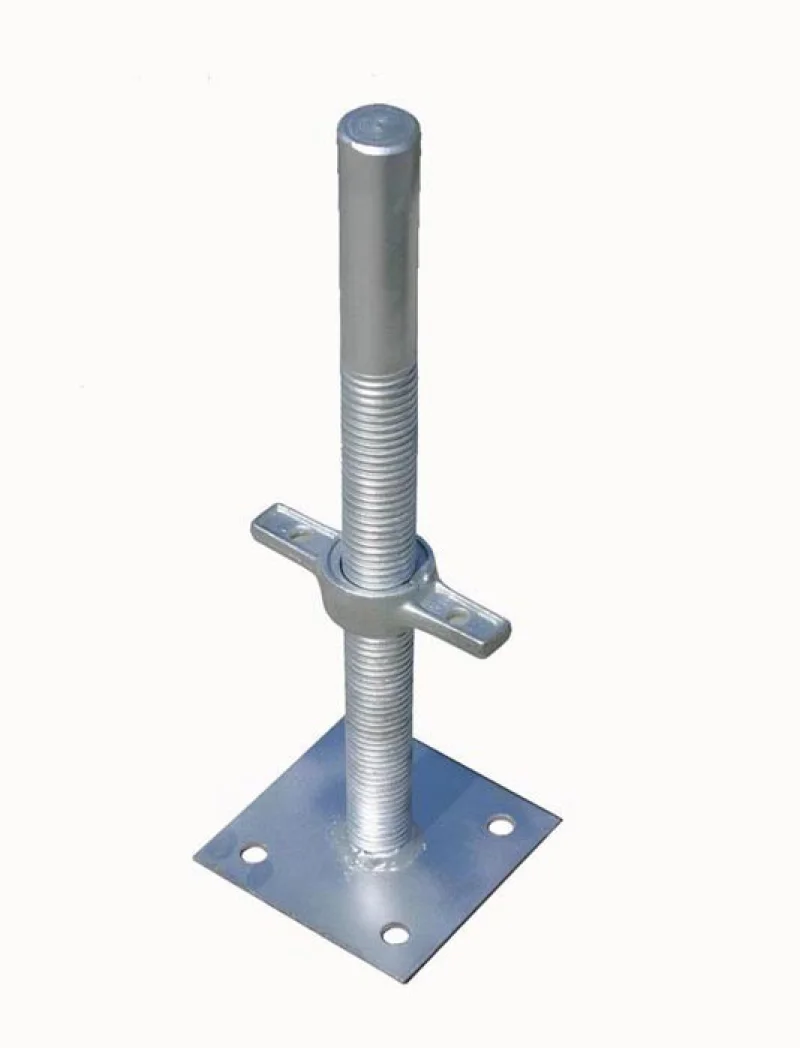
Conclusion: Don't Compromise on Your Base Leveler
Selecting the correct screw jack is not just a matter of matching a part number on a purchase order; it is a critical engineering decision that dictates the safety, stability, and overall efficiency of your entire construction site.
Whether you need the absolute unyielding strength of a solid MS screw jack for a towering commercial high-rise, the terrain-gripping adaptability of a swivel base screw jack, the specialized support of a U-head, or the fast-paced mobility of a caster wheel unit, matching the hardware to the environment is the only way to mitigate risk.
If you build on the wrong foundation, the integrity of the highest deck is already compromised before the first worker even climbs the ladder. Equip your crew with the exact hardware they need to erect structures safely, quickly, and with total confidence.
Upgrade Your Scaffolding Foundation Today
At Shri Radha Enterprises, we manufacture premium, extensively load-tested scaffolding hardware designed specifically to withstand the brutal realities of modern construction sites. Stop gambling with thin, uncertified bases and secure your next massive project with heavy-duty solid steel.
- Browse Our Full Catalog of Premium Screw Jacks
- Request a Custom Wholesale Quote for Your Next Project
- Contact Us Today via SREManufacturer.com to Speak with a Scaffolding Hardware Expert
Shri Radha Enterprises Team
We specialize in nylon rollers, sliding gate wheels, gate hardware, scaffolding items, cuplock systems, and accessories.